10x50 vs 7x50 Binoculars: Which Fits You? (November 2026)
Pick 10x50 binoculars when you want more reach on distant subjects in good light. Pick 7x50 binoculars when you want a wide, steady, bright view for the night sky or long sessions.
On this page (7 sections)
Pick 10x50 binoculars when you want more reach on distant subjects in good light. Pick 7x50 binoculars when you want a wide, steady, bright view for the night sky or long sessions.
In this binoculars 10x50 vs 7x50 comparison, the deciding factors are how far you look, how much light you need and how steady your hands are.
Both pairs share the same 50mm objective lenses. That means each one gathers light from the same size front glass.
What changes is how hard the optics pull that light into a tighter image and how wide a slice of the scene you see.
The gap shows up at dusk and in open country. A 10x50 brings distant birds and antelope closer; a 7x50 shows a bigger, calmer picture that stays usable when light fades.


Binoculars 10x50 vs 7x50 at a glance
The 10x50 gives more reach; the 7x50 gives a wider, brighter, steadier view. The table below lines up the numbers that matter before you read the sections.
| Product | Best for | Magnification | Objective lens | Field of view | Our score |
|---|---|---|---|---|---|
| Bushnell Falcon 10x50 | daytime distance | 10x | 50mm | 300 ft at 1,000 yd | 9.7 |
| Bushnell PowerView 10x50 | all-purpose 10x50 | 10x | 50mm | 113.2 ft at 1,000 yd | 9.6 |
| Celestron Cometron 7x50mm Astronomy Binoculars | the night sky | 7x | 50mm | 6.6° (346 ft at 1,000 yd) | 9.5 |
| Vortex Crossfire HD 12x50 | long-range detail | 12x | 50mm | 273 ft at 1,000 yd | 8.6 |
The magnification figure describes how many times closer the subject appears. The objective is the front lens diameter in millimeters.
Divide the objective by the magnification to get the exit pupil, the width of the light beam that reaches your eye.
For the 10x50 that sum is 50 divided by 10, or 5mm. For the 7x50 it is 50 divided by 7, or about 7.1mm.
The Celestron Cometron confirms the 7.1mm figure, while the Bushnell Falcon lists 5mm for its 10x build.
A wider exit pupil is easier to line up with your own pupil in low light. It also makes the pair more forgiving when your hands drift.
How magnification changes what you see
10x pulls subjects closer and 7x keeps more of the scene in frame. The difference is about reach against context, and it shapes what each pair is good at.
The Bushnell Falcon and PowerView both sit at 10x. At 1,000 yards, a bird seen at 10x appears as if it were 100 yards away.
That extra reach helps you read detail on a bird's plumage or a deer's antlers at long range.
The Cometron 7x makes that same bird look as though it were about 143 yards off. You give up some detail, but the picture feels more stable and easier to follow.
Higher magnification also narrows the field. More pull means less scene in the frame at once.
That trade-off matters more in open country than in a backyard.
When 10x is the right reach
Pick 10x when your subjects sit far off and you have decent light. Hunters glassing a ridge line, birders watching raptors over a valley and sports fans in the upper deck all gain from the extra pull.
The Falcon adds an InstaFocus wheel that snaps onto moving targets quickly. That speed suits action like a running back or a hawk riding a thermal.
The PowerView stays at 10x but adds multi-coated BK-7 optics and Realtree AP camo. Its narrower field means you pan a little more to cover the same ground.
When 7x is the better reach
Pick 7x when the whole scene matters more than a tight crop. A wide view lets you track a comet across the sky or follow a flock as it turns without losing it at the edge.
The lower magnification also hides small hand tremors. That makes 7x kind to anyone who holds binoculars for long stretches or watches from a standing position without support.
Our guide on binoculars field of view explains how that number works and why it matters more than magnification alone.
Light gathering in low light
The 7x50 puts more of its gathered light into your pupil in near darkness. The 10x50 wins in daylight reach, but the 7x50 is the brighter pair when your eyes are wide open.
Exit pupil size decides this. In dim conditions your pupil opens to about 7mm.
A 7.1mm exit pupil from the Cometron nearly fills it, so almost all the light the 50mm lenses collect reaches your eye.
The Falcon's 10x50 squeezes that light into a 5mm beam. In twilight some of it spills past your pupil.
The image is still usable, but the 7x50 holds brightness longer.
This is why 7x50 pairs are called night glasses. The 50mm objective does the gathering and the modest 7x keeps the beam wide.
A 10x50 with a smaller objective would be dimmer still.
If you mostly view in full daylight, the light advantage of the 7x50 matters less. The extra reach of 10x usually serves you better then.
Coating and prism effects on low-light views
Coating and prism glass also change how bright a pair looks at dusk. The Cometron pairs its 7.1mm exit pupil with multi-coated optics and BK7 Porro prism glass.
That combination puts a lot of transmitted light into a wide beam.
The Falcon is fully coated rather than multi-coated. Its 5mm exit pupil already limits how much of the gathered light your eye receives.
Coatings matter, but the exit pupil does more to set the brightness ceiling.
Prism type plays a part too. Porro prism pairs like the Falcon and Cometron give strong depth perception.
The Vortex's roof prism body is more compact, and its fully multi-coated HD glass helps it hold up in poor light despite a 4.2mm exit pupil.
Field of view and tracking subjects
A 7x50 shows a wider slice of the scene, so panning and tracking feel easier. A 10x50 crops tighter and needs more sweeping to cover the same ground.
The Cometron lists a 6.6° angular field, which works out to about 346 feet at 1,000 yards. That is a big window.
You can fit a whole constellation or a wide valley in one look.
The Bushnell PowerView lists a much narrower figure, and the Vortex 12x50 lists 273 feet at 1,000 yards. The wider the field, the less you hunt around for your subject.
This matters for fast movers. A wide view lets you find a bird in flight and keep it framed as it crosses.
A narrow view asks more of your hands and eyes.
Field of view at 1,000 yards
Think of the field as a window you look through. At 1,000 yards, the Cometron's window spans roughly 346 feet.
A narrower 10x window spans less.
Wide windows favor scanning open country, sky and big flocks. Tight windows favor studying one subject in detail.
Neither is wrong; they serve different jobs.
The 10x50 pairs here vary too. The PowerView's field is tighter than the Falcon's 300-foot figure, so even within 10x you should compare this spec.
Wider view and easier handoff
A wide field also helps when two people share one pair. The second viewer finds the subject faster when more of the scene is visible.
For stargazing, the wide view of the Cometron lets you sweep the Milky Way without losing your place. That is a real comfort when you are standing in the dark.
The Vortex's narrower field rewards a mounted or braced setup for long-range study.
Weight and steady holding
Lower magnification is easier to hold still, and the 7x50 wins that contest. Weight varies by model, so check the ounces as well as the magnification.
The Bushnell Falcon lists 830 g. The Cometron lists 774 g.
The Vortex 12x50 lists 1.8 pounds. These are close enough that the bigger factor is how much each pair magnifies your hand shake.
At 10x, a small tremor moves the image ten times as much as your eye sees it. At 7x that same tremor is amplified less.
The 7x50 simply feels calmer in the hand.
Long sessions show the difference. Standing and watching a ridge for an hour is tiring with 10x and gentler with 7x.
The Vortex 12x50 magnifies movement even more, so it rewards a rest or a mount.
Using a tripod or harness
Both the Cometron and the Vortex are tripod adaptable. A mount takes hand shake out of the picture and lets you study detail without fatigue.
The Cometron has a built-in tripod socket. The Vortex also takes a tripod or a car window mount.
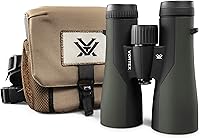
Either turns a shaky view into a steady one. The Vortex even ships with a GlassPak harness that carries the weight on your chest and braces the pair against your body.
The Falcon and PowerView rely on rubber grip pads and armoring for a secure hold. That helps in the hand, but neither lists a tripod socket, so plan on hand holding or a rest.
Our guide on how to adjust binoculars covers eyecup and diopter setup so each eye sees a sharp, matched image.
Optics and coating quality
Coating quality decides brightness and sharpness as much as the magnification number does. Read the coating line before you compare 10x against 7x.
The Falcon uses fully coated optics and BK7 Porro prisms. The PowerView uses multi-coated BK-7 optics.
The Cometron uses multi-coated optics with BK7 prism glass. The Vortex goes further with fully multi-coated lenses and HD glass elements.
Multi-coated means more than one layer of anti-reflective coating on the glass surfaces. More layers cut glare and boost light transmission.
That helps any pair, but it matters most in low light.
Glass quality changes sharpness and color. The Vortex's HD glass is built to cut chromatic aberration and keep edges sharp.
That edge-to-edge clarity is why it earns its place for long-range detail. Its diopter adjusts ±5 diopters, the widest range here for matching two different eyes.
Our explainer on what is ED glass in binoculars covers how extra-low dispersion glass reduces color fringing. HD glass works on the same principle.
Which binoculars should you buy?
Buy a 10x50 if daylight reach is your priority; buy a 7x50 if you view at night or want a steady wide view. The right pair follows your main use, not a bigger number.
Pick the Bushnell Falcon 10x50 if you want the best all-round reach for sports, birds and scenery in daylight. Its 10x pull and 300-foot field give you detail without the narrow window of a 12x.
Its InstaFocus wheel makes tracking fast movers quick and easy. Fold-down eyecups let eyeglass wearers keep their glasses on.
Pick the Bushnell PowerView 10x50 if you want a 10x pair for hunting and hiking in camo. The Realtree AP finish and multi-coated BK-7 optics suit field use.
Its narrower field asks you to pan more. Fold-down eyecups suit eyeglass wearers here too.
Pick the Celestron Cometron 7x50 if the night sky is your target or you view in dim light. The 7.1mm exit pupil and 6.6° view make stargazing and twilight viewing comfortable.
The tripod socket helps for long sessions. Its close focus of 26.2 feet is long, so it is not the pair for watching a feeder from a few steps away.
Pick the Vortex Crossfire HD 12x50 only if you need the most reach here and will brace or mount the pair. The 12x and HD glass show fine detail at long range.
The water and fogproof build suits tough weather. Nitrogen purging and o-ring seals keep it usable in rain and fog.
A quick word on 12x50
Some buyers ask about the next step up in reach. Our comparison of 10x50 vs 12x50 binoculars for hunting covers when the extra pull is worth the narrower view and the extra shake.
The 10x50 vs 7x50 choice comes down to your subject and your light. Buy the 10x50 for daytime distance and the 7x50 for the dark or for a wide, steady view.
Pick the pair that matches how you actually look, not the bigger magnification on the box.
Frequently asked questions
Is 10x50 better than 7x50 for birding?
For most daytime birding, 10x50 is the better fit because the extra reach shows feather and bill detail at distance. Pick 7x50 if you watch birds in deep shade or prefer a wider, steadier view over a whole flock.
Are 7x50 binoculars good in daylight?
Yes, though the wide 7.1mm exit pupil is more light than your eye can use in bright sun. The payoff is a broad, easy view and less shake, which makes 7x50 a comfortable pair for long daytime sessions.
Why do 7x50 binoculars get called night glasses?
A 7x50 divides the 50mm objective by 7x to give a 7.1mm exit pupil, which nearly matches a fully dark-adapted eye. That puts more gathered light into your pupil than a 10x50, whose 5mm exit pupil throws some away.
Do 10x50 binoculars magnify hand shake?
Yes. Every step up in magnification also magnifies your hand movement, so 10x needs steadier hands than 7x.
A tripod or a chest harness helps either pair stay still during long viewing.
Which is easier to hold for a long session, 7x50 or 10x50?
7x50 is usually the calmer pair to hold because its lower magnification hides small hand movements. Weight varies by model, so compare the actual ounces before you buy if you plan to stand and watch for hours.