How to Adjust Binoculars to Fit Your Eyes
To learn how to adjust binoculars, set the eyecups and barrel spacing, focus one eye at a time, then use the diopter to match the view for both eyes. Make these adjustments while looking at a distant, stationary subject.
On this page (10 sections)
- How do you adjust binoculars step by step?
- How should you set the eyecups?
- How do you set the distance between the barrels?
- How do you adjust focus and diopter?
- Which binocular controls help you get a comfortable fit?
- How do you use binoculars with glasses?
- Why are binoculars still blurry after adjustment?
- What common mistakes make binocular adjustment harder?
- What is the right order for adjusting binoculars?
- How to adjust binoculars: which pair should you choose?
To adjust binoculars, set the eyecups and barrel spacing, focus each eye separately, then use the diopter to match both views. Make these changes while looking at a distant, still object, and keep the center focus wheel at the same setting during diopter setup.
A good fit gives you one round image without black edges or blur. Once the diopter is set for your eyes, use the center wheel to focus at different distances.
How do you adjust binoculars step by step?
Set the eyecups, merge the two views, focus one eye, then set the diopter for the other eye. Start with a distant subject that has clear details, such as a sign or a tree trunk.
- Set the eyecups for bare eyes or glasses.
- Hold the binoculars to your eyes and move the barrels until the two circles merge into one.
- Cover the lens on the side with the diopter control, or close that eye.
- Use the center focus wheel to make the view sharp for the uncovered eye.
- Cover the other lens, or close the other eye.
- Turn the diopter control until the same subject looks sharp to the second eye.
- Open both eyes and use the center wheel to focus on subjects at different distances.
The diopter is often on one eyepiece, but its position and markings vary. Check the binoculars' manual if you can't identify which control adjusts it.
How should you set the eyecups?
Extend the eyecups for viewing without glasses, and retract or fold them down if you wear glasses. The goal is to see the full round image while keeping your eyes at a comfortable distance from the eyepieces.
Twist-up eyecups may have more than one stop. Try each position and keep the one that gives you a complete view without pressing the eyecups into your face.
With glasses, keep them on while adjusting the binoculars. For more help with viewing position and eye relief, see our guide to using binoculars with glasses.
Why do you see black edges around the image?
Black edges often mean your eyes aren't aligned with the eyepieces or are too far from them. Adjust the eyecups and move the binoculars slightly until the view fills each circle.
If the view is still cut off, reset the spacing between the barrels. Avoid pressing hard against the eyepieces, especially when wearing glasses.
How do you set the distance between the barrels?
Move the barrels inward or outward until the two views merge into one circle. This spacing is called interpupillary distance, and the right setting depends on the distance between your eyes.
Look through the binoculars at a bright, plain area, then bring the eyepieces together or spread them apart slowly. Stop when you see one round image instead of two overlapping circles.
Reset this adjustment whenever someone else uses the binoculars. A small spacing change can make the view tiring or leave dark crescents at the edges.
How do you adjust focus and diopter?
Use the center wheel for the eye without the diopter, then use the diopter control for the other eye. This lets each side account for differences between your eyes.
Keep the binoculars steady and focus on the same distant subject throughout setup. Cover one objective lens at a time, or close one eye without squeezing it shut.
First, cover the side with the diopter control and focus the uncovered eye with the center wheel. Then cover the other side and turn the diopter until the subject is sharp to the uncovered eye.
Open both eyes and check the view. From then on, use the center wheel to focus at different distances, and leave the diopter where it is.
What if your binoculars don't have a diopter control?
Some binoculars may use a different focusing design, so check the manual for the correct method. Don't force an eyepiece or knob that doesn't turn easily.
For definitions of binocular features and help comparing them, start with our binocular basics guide.
Which binocular controls help you get a comfortable fit?
Eyecups, a center focus wheel, and a diopter control each help you adjust a different part of the fit. Choose binoculars with controls that are easy for you to find and operate, especially if you expect to change the fit for glasses or share them with someone else.
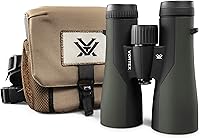
The Vortex Triumph HD 10x42 has adjustable rubber eyecups and an adjustable diopter. Its center focus design suits the usual setup sequence.
The included GlassPak harness and neck strap give you two carry options. Choose it if you want 10x magnification and adjustable eyecups for hiking or hunting; skip it if you prefer the steadier, wider-feeling view typical of 8x binoculars.
The Celestron Nature DX ED 8x42 has twist-up eyecups and center focus, plus ED glass and tripod adaptability. Choose it if you want 8x magnification for finding and following wildlife, or if stable tripod viewing matters; skip it if you don't need its ED optics or tripod-ready design.
The Nikon PROSTAFF P3 8x42 pairs turn-and-slide eyecups and center focus with 20.2 mm of eye relief. Choose it if you wear glasses or want 8x magnification for birding, hiking, or sports; skip it if you specifically want 10x magnification for a closer view.
The Bushnell H2O Xtreme 10x42 has center focus, fully multi-coated optics, and an IPX7 waterproof rating. Choose it for boating or wet outdoor conditions; skip it if eyecup adjustment or long eye relief is a priority, since those features aren't specified for this model.
Before choosing between these models, compare the practical tradeoffs in what to look for when buying binoculars. Magnification, eye relief, eyecup design, and weather protection affect how well a pair suits your use and viewing position.
How do you use binoculars with glasses?
Keep your glasses on and retract the eyecups before adjusting focus. Then set the barrel spacing and diopter with your glasses in place.
Don't press your glasses hard against the eyecups. If the image looks cropped, move your eyes slightly farther from the eyepieces or check whether the eyecups retract fully.
Eye relief affects how much of the view you can see from behind glasses. Our guide to binocular field of view explains another factor that shapes what you see through the eyepieces.
Why are binoculars still blurry after adjustment?
Check the lens caps, lens surfaces, eye position, and focus controls before assuming the binoculars are faulty. A fingerprint, an eyecup in the wrong position, or an unfocused center wheel can make the image seem soft.
Use a lens cloth to remove fingerprints, following the binoculars' care instructions. Don't rub grit across the glass or use a shirt sleeve.
If only one eye stays blurry, repeat the diopter setup on a distant subject. If both views remain blurry after careful adjustment, try another distance and consult the manual or an eye care professional.
What common mistakes make binocular adjustment harder?
Changing several controls at once makes it harder to find the setting that caused a poor view. Set one thing at a time, and keep the same subject in view while you check each change.
Don't use the center wheel to correct blur in only one eye during diopter setup. First focus the eye without the diopter using the center wheel, then adjust only the diopter for the other eye.
Avoid setting up on a moving or nearby subject. A distant, stationary target makes small focus changes easier to see, and it helps prevent you from mistaking subject movement for blur.
Finally, don't force a stiff control or turn the diopter after setup just to sharpen a view at a new distance. Use the center wheel for distance changes and consult the manual if a control's purpose is unclear.
What is the right order for adjusting binoculars?
Set the eyecups first, barrel spacing second, then focus each eye and set the diopter. This order keeps changes to one setting from undoing another.
Choose the eyecup position that suits your glasses, merge the circles by moving the barrels, and focus each eye in turn. Afterward, leave the diopter alone and use the center wheel as you change distance.
How to adjust binoculars: which pair should you choose?
Choose binoculars by the view and fit you need, then adjust them in the same order: eyecups, spacing, focus, and diopter. The Nikon PROSTAFF P3 8x42 suits glasses wearers who want long eye relief, while the Celestron Nature DX ED 8x42 fits birders who value ED glass and tripod adaptability.
Pick the Vortex Triumph HD 10x42 if you want adjustable eyecups and a diopter in a 10x model. Choose the Bushnell H2O Xtreme 10x42 for wet outings where its IPX7 waterproof rating matters.
For a broader comparison, see 8x42 binoculars for birding and nature and 10x42 binoculars for everyday outdoor use.
A correct setup should give you one complete, comfortable view without dark edges. Set the diopter once for your eyes, then use the center wheel to follow subjects at different distances.
Frequently asked questions
Why do binoculars show two circles instead of one?
The barrels may be too far apart or too close together for your eyes. Hold the binoculars to your eyes and move the barrels inward or outward until the two circles merge into one round view.
Set this spacing before adjusting focus.
Should I adjust the diopter every time I use binoculars?
Usually, you only need to set the diopter when you first fit the binoculars to your eyes or when another person changes it. Afterward, focus on different distances with the center wheel.
If your vision or eyeglass use changes, repeat the diopter setup.
How do you adjust binoculars if you wear glasses?
Fold down or retract the eyecups, then place your glasses against them without pressing hard. Adjust the barrel spacing and focus as usual.
If you still see a narrow or cut-off view, check the binoculars' eye relief and the eyecup settings.
Why are binoculars blurry in one eye?
The diopter may not match the difference between your eyes, or the center focus may be off. Cover the eye that uses the diopter and focus the other side with the center wheel, then switch eyes and adjust only the diopter.
If the view stays blurry, check for dirty lenses or a vision issue.