Best 8x42 Binoculars for Birding and Nature: Top 9 Picks (October 2026)
The best 8x42 binoculars for birding and nature include the Nikon Monarch M5 8x42 for bird tracking, the Vortex Diamondback HD 8x42 for open habitats, and the Celestron TrailSeeker ED 8x42 for carry flexibility.
On this page (7 sections)
- How we chose the best 8x42 binoculars
- Which 8x42 binoculars fit your birding style?
- What should you compare before buying 8x42 binoculars?
- How do you set up 8x42 binoculars?
- How can you keep binoculars clear and ready to use?
- What common 8x42 buying mistakes should you avoid?
- Which 8x42 binoculars should you choose?
The best 8x42 binoculars for most birders are the Nikon Monarch M5 8x42, with ED glass, close focus and weather protection. Choose the Vortex Diamondback HD for its wide stated view, or the Celestron TrailSeeker ED if you want a carry harness and padded neck strap.
An 8x42 format combines 8x magnification with 42 mm objective lenses. It gives you a useful balance for scanning, following wildlife and viewing in varied daylight, but the best choice depends on your terrain, eyesight and how you carry your gear.
Our picks at a glance
-
1

-
2

-
3

How we chose the best 8x42 binoculars
We compared optical features, field of view, eye relief, weather protection and included carry gear against common birding needs. The scores reflect how well each set of features fits those needs.
A wider stated field of view can make it easier to scan and follow movement. ED glass is useful if reducing color fringing is a priority, while long eye relief and adjustable eyecups deserve close attention if you wear glasses.
Start with your most common setting: wooded paths, open wetlands, a backyard feeder or long hikes. For broader buying criteria, read what to look for when buying binoculars, and compare magnification choices in our guide to 10x42 binoculars for everyday outdoor use.
| Product | Best for | Magnification and objective | Field of view | Weather protection | Our score |
|---|---|---|---|---|---|
| Nikon Monarch M5 8x42 | bird tracking | 8x42 | 335 ft | Waterproof and fogproof | 8.9 |
| Vortex Diamondback HD 8x42 | open habitats | 8x42 | 393 ft | Waterproof and fogproof | 8.8 |
| Celestron TrailSeeker ED 8x42 | carry flexibility | 8x42 | 142 m | Waterproof and nitrogen purged | 8.7 |
| Vortex Crossfire HD 8x42 | rugged trails | 8x42 | 390 ft | Waterproof and fogproof | 8.6 |
| Celestron Nature DX ED 8x42 | close nature viewing | 8x42 | 7.5° | Waterproof and nitrogen purged | 8.6 |
| Nikon PROSTAFF P3 8x42 | eyeglass wearers | 8x42 | 377 ft | 8.5 | |
| Celestron Nature DX 8x42 | regular birding | 8x42 | 388 ft | Waterproof and nitrogen purged | 8.4 |
| Celestron Outland X 8x42 | casual day trips | 8x42 | 7° | Waterproof and nitrogen purged | 8.0 |
| Athlon Argos G2 HD 8x42 | lens-coating care | 8x42 | 7.1° | 7.8 |
Which 8x42 binoculars fit your birding style?
The best pick depends on what you need to do with the view: follow moving birds, pick out color detail, view nearby wildlife or keep the binoculars comfortable on a long walk. These options cover those different priorities.
Nikon Monarch M5 8x42: Best for bird tracking
- ED glass
- 335 ft field of view
- Waterproof and fogproof
- Close focus to 8.2 ft
ED glass, a broad field of view and close focus suit mixed birding and nature walks. Turn-and-slide eyecups are designed for comfortable use with glasses.
Pros
- ED glass
- Waterproof and fogproof
- Close focus to 8.2 ft
Cons
- Stated field of view is narrower than the Vortex Diamondback HD
The Nikon Monarch M5 is the top choice for mixed birding and nature walks. Its ED glass is designed to minimize color fringing, and dielectric prism coatings support bright, natural-looking views.
Its field of view is 335 ft, with close focus as near as 8.2 ft. That pairing suits outings where you move between distant birds and nearby subjects.
The nitrogen-purged, O-ring-sealed housing is waterproof and fogproof. Turn-and-slide eyecups adjust for viewing with glasses, and a case and neck strap are included.
Choose the Monarch M5 if you want ED glass, close focus and weather protection in one pair. Skip it if your first priority is the widest stated field of view in this group, since the Diamondback HD covers more ground.
Vortex Diamondback HD 8x42: Best for open habitats
- 393 ft field of view
- Fully multi-coated lenses
- Waterproof and fogproof
- GlassPak harness included
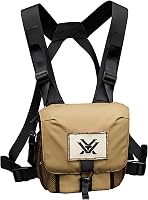
A wide stated field of view can help you scan open ground and follow moving birds. It includes a GlassPak harness and is tripod adaptable.
Pros
- 393 ft field of view
- GlassPak harness included
- Tripod adaptable
Cons
- 17 mm eye relief is shorter than the Nikon PROSTAFF P3
The Vortex Diamondback HD is the pick for scanning open habitats. Its 393 ft stated field of view is the widest among these picks, which can help you locate birds and follow movement across open ground.
Fully multi-coated lenses and dielectric prism coatings support bright, color-accurate views. The adjustable eyecups twist up or down, while the center focus wheel adjusts both barrels together.
Argon purging and O-ring seals provide waterproof and fogproof performance. It is tripod adaptable and includes a GlassPak harness, so it suits walks where ready access matters.
Choose it for broad field coverage and carry convenience. If your birding takes you into close viewing or you specifically want ED glass, compare it with the Monarch M5 or TrailSeeker ED.
Celestron TrailSeeker ED 8x42: Best for carry flexibility
- ED glass
- Waterproof and nitrogen purged
- Carry harness and padded neck strap included
- Tripod adaptable
ED glass and phase-coated BaK-4 prisms support sharp, bright views. A carry harness and padded neck strap give you two ways to carry it.
Pros
- ED glass
- Carry harness and padded neck strap included
- Tripod adaptable
Cons
- Field of view is stated in meters, which makes direct comparison less convenient
The Celestron TrailSeeker ED suits birders who want ED glass plus flexible carry options. It comes with both a carry harness and padded neck strap, along with a protective soft case.
ED objective lenses are designed to reduce color fringing, while phase-coated BaK-4 prisms support bright, detailed views. The rubber-armored body is waterproof and nitrogen purged to help prevent internal fogging.
Its field of view is 142 m, and the binoculars are tripod adaptable. Twist-up eyecups adjust for viewing with or without glasses.
Choose the TrailSeeker ED if you want to switch between harness and strap or plan long, steady viewing from a tripod. Skip it if you want an easy direct comparison with picks whose field of view is stated in feet.
Vortex Crossfire HD 8x42: Best for rugged trails

- 390 ft field of view
- Waterproof and fogproof
- Tripod adaptable
- GlassPak harness included
This weather-ready pair combines a broad stated view with rubber armor and a GlassPak harness. It suits trail users who want binoculars ready to carry.
Pros
- 390 ft field of view
- GlassPak harness included
- Waterproof and fogproof
Cons
- 14 mm eye relief is the shortest among these picks
The Vortex Crossfire HD is a practical choice for rugged trail use. It pairs a 390 ft stated field of view with rubber armor, waterproof and fogproof construction, and an included GlassPak harness.
Select glass elements are designed to reduce chromatic aberration, and fully multi-coated lenses support light transmission. It is tripod adaptable for steady viewing.
Its 14 mm eye relief is the shortest among picks with stated measurements. If you wear glasses, check whether you can get a full, comfortable view before settling on this pair.
Choose it for trail carrying, weather protection and tripod use. Skip it if long eye relief is a key need; the Nikon PROSTAFF P3 has a longer stated measurement.
Celestron Nature DX ED 8x42: Best for close nature viewing

- ED glass
- Close focus to 6.5 ft
- Waterproof and nitrogen purged
- Tripod adaptable
ED glass and close focus to 6.5 ft support both distant wildlife viewing and nearby subjects. It is tripod adaptable for steady viewing.
Pros
- ED glass
- Close focus to 6.5 ft
- Tripod adaptable
Cons
- Field of view is given in degrees rather than feet
The Celestron Nature DX ED is the clearest fit for nearby nature subjects as well as distant birds. It focuses as close as 6.5 ft and uses ED glass designed to reduce color fringing.
Phase-coated BaK-4 prisms and fully multi-coated optics support light transmission. Its waterproof, nitrogen-purged body is rubber armored, and it can mount on a standard tripod with an adapter.
The field of view is stated as 7.5 degrees. That format is less direct to compare with figures in feet, so prioritize its close-focus capability and ED glass when weighing it against other picks.
Choose it if butterflies, feeder birds and other nearby subjects are part of your viewing. Skip it if you want a field-of-view figure in feet for a quick side-by-side comparison.
Nikon PROSTAFF P3 8x42: Best for eyeglass wearers

- 20.2 mm eye relief
- 377 ft field of view
- Waterproof and fogproof
- Rubber armor
Long eye relief and turn-and-slide eyecups make this a useful option for viewing with glasses. Its stated field of view also helps when scanning for wildlife.
Pros
- 20.2 mm eye relief
- 377 ft field of view
- Waterproof and fogproof
Cons
- Does not include ED glass
The Nikon PROSTAFF P3 is the strongest match for glasses wearers who value long eye relief. It has 20.2 mm of eye relief and turn-and-slide eyecups, giving you room to adjust your viewing position.
Its 377 ft field of view is useful for scanning, while O-ring seals and nitrogen purging provide waterproof and fogproof performance. The multilayer-coated lenses and silver-alloy prism coating support contrast and color.
This model doesn't include ED glass. Choose it for its eye relief and weather protection; skip it if reducing color fringing is your main reason for upgrading.
Celestron Nature DX 8x42: Best for regular birding

- 388 ft field of view
- Waterproof and nitrogen purged
- Phase-coated BaK-4 prisms
- Tripod adaptable
A broad stated field of view, weather protection and tripod adaptability make this a practical choice for routine outdoor viewing. It uses phase-coated BaK-4 prisms.
Pros
- 388 ft field of view
- Waterproof and nitrogen purged
- Tripod adaptable
Cons
- Does not include ED glass
The standard Celestron Nature DX suits regular birding without an ED-glass priority. Its 388 ft field of view supports scanning, and phase-coated BaK-4 prisms with fully multi-coated lenses support contrast, resolution and color accuracy.
The rubber-armored polycarbonate body is waterproof and nitrogen purged. It is tripod adaptable and comes with a case and neck strap.
Choose it if you want a weather-ready pair for routine outdoor viewing and value broad field coverage. Skip it if you want ED glass or frequent close viewing, where the Nature DX ED offers those specific features.
Celestron Outland X 8x42: Best for casual day trips

- Multi-coated optics
- Waterproof and nitrogen purged
- Tripod adaptable
- BaK-4 prisms
Multi-coated optics, BaK-4 prisms and weather protection cover the main needs for casual birding and hikes. It also includes a case and neck strap.
Pros
- Waterproof and nitrogen purged
- Tripod adaptable
- Case and neck strap included
Cons
- Field of view is stated in degrees rather than feet
The Celestron Outland X covers the essentials for casual day trips and birding. Its multi-coated optics and BaK-4 prisms support clear viewing, while its waterproof, nitrogen-purged build is ready for changing weather.
It is tripod adaptable and includes a case, neck strap, lens cloth, objective lens caps and rainguard. Its field of view is stated as 7 degrees.
Choose it if you want a straightforward outdoor set with useful accessories. Skip it if comparing field-of-view figures in feet is important to your decision.
Athlon Argos G2 HD 8x42: Best for lens-coating care

- Fully multi-coated lenses
- ESP dielectric prism coating
- XPL exterior lens coating
- 17.3 mm eye relief
Its ESP dielectric prism coating and XPL exterior lens coating are the stand-out features. The package includes a padded neck strap and soft-sided case.
Pros
- ESP dielectric prism coating
- XPL exterior lens coating
- 17.3 mm eye relief
Cons
- Weather protection details are not stated
The Athlon Argos G2 HD is a good fit if lens coatings are your priority. Athlon says its ESP dielectric prism coating reflects over 99% of light, while the XPL coating protects exterior lenses from dirt, oil and scratches.
It has fully multi-coated lenses, 17.3 mm eye relief and a stated field of view of 7.1 degrees. A soft-sided case and padded neck strap are included.
The weather protection details aren't specified. Choose it if the coating features matter and you can confirm it suits the conditions you face; skip it if waterproof and fogproof performance is essential.
What should you compare before buying 8x42 binoculars?
Begin with how you use binoculars, then compare the few features that affect that activity most. Field of view matters for scanning; eye relief affects comfort with glasses; weather protection matters when you head out in damp or changeable conditions.
Is a wide field of view useful for birding?
A wider field of view can make it easier to find a subject and keep it in view as it moves. The Diamondback HD states 393 ft, the Crossfire HD 390 ft and the standard Nature DX 388 ft.
Check that you are comparing figures in the same units before deciding that one view is wider. Field of view is one part of the fit; eye comfort, focusing and weight also influence how easy a pair is to use.
Does ED glass matter in 8x42 binoculars?
ED glass is designed to reduce chromatic aberration, which can appear as color fringing around high-contrast edges. The Monarch M5, TrailSeeker ED and Nature DX ED include it.
You don't need to make ED glass your first requirement if your priority is eye relief, carry gear or a broad field of view. Compare the whole set of features, then pay extra attention to ED options if fringing is a concern.
What should glasses wearers check?
Look for enough eye relief and eyecups that adjust to preserve a full view while you wear your glasses. The PROSTAFF P3 states 20.2 mm of eye relief, and the Monarch M5 has adjustable turn-and-slide eyecups.
Set the eyecups before judging the view. Our guide to using binoculars with glasses explains how to adjust the fit and focus.
How should you carry binoculars on a walk?
A harness can keep binoculars ready to raise and spread their weight across your upper body. The Diamondback HD and Crossfire HD include GlassPak harnesses, while the TrailSeeker ED includes a carry harness and padded neck strap.
A neck strap may be enough for short outings, but a harness can be more comfortable when you carry binoculars for hours. See our best binocular harness guide to compare carrying styles.
When should you use a tripod?
A tripod helps keep the view steady during long periods of observation. The Diamondback HD, TrailSeeker ED, Crossfire HD, Nature DX ED, Nature DX and Outland X are tripod adaptable; Celestron models may need an adapter.
If you mainly follow active birds on foot, a tripod may add little to your routine. It is more useful when you watch a fixed area for a long time or want a steady view of distant scenery.
How do you set up 8x42 binoculars?
Adjust the binoculars to your eyes before you start scanning. A properly fitted view should look like one clear, full circle rather than two overlapping circles or a dark-edged image.
First set the distance between the barrels so both eyes see a single circle. Then focus on a distant object, adjust the diopter for differences between your eyes, and use the center focus wheel to sharpen the image.
If you wear glasses, start with the eyecups retracted or adjusted for your lenses, then check that you can see the full field. Our step-by-step guide to adjusting binoculars to fit your eyes covers the setup process.
How can you keep binoculars clear and ready to use?
Protect the lenses from grit and clean them gently when needed. Use lens caps between viewing sessions, keep a lens cloth with your gear, and store the binoculars in their case when you aren't using them.
Brush or blow loose dust away before wiping a lens. Rubbing grit across the glass can scratch it.
Household cleaners may leave residue. Keep the binoculars secure with a strap or harness when walking, especially when you need both hands free.
Waterproof and fogproof construction helps in wet weather, but it doesn't remove the need to dry the exterior after an outing. Wipe off moisture and let the binoculars air dry before storing them.
What common 8x42 buying mistakes should you avoid?
Don't choose by magnification and objective size alone. Two 8x42 binoculars can differ in field of view, eye relief, coatings, focus distance, carry gear and weather protection.
Also avoid treating all field-of-view figures as directly comparable. Some models state feet, meters or degrees, so convert or verify the units before deciding which gives you the broader view.
If you wear glasses, don't assume every adjustable eyecup will give you a full view. Compare the eye relief, then make sure the eyecups can accommodate your viewing position.
Finally, don't pay attention to a feature you won't use while overlooking a practical need. ED glass can reduce color fringing, but it doesn't replace comfortable fit, a carry setup you like or weather protection for the conditions you encounter.
Which 8x42 binoculars should you choose?
Choose the Nikon Monarch M5 for a balanced birding pair with ED glass, close focus and weather protection. Pick the Vortex Diamondback HD for the widest stated view and included harness, the Celestron TrailSeeker ED for two carry options, or the Nikon PROSTAFF P3 for long eye relief with glasses.
For close nature viewing, choose the Celestron Nature DX ED; for a simpler routine outdoor pair without ED glass, consider the standard Nature DX. If you're deciding whether 8x42 is the right format, compare it with our best 10x42 binoculars for outdoor use, then read what to look for when buying binoculars for a broader fit checklist.
Our top 3 picks at a glance
-
1
-
2
-
3
Frequently asked questions
Are 8x42 binoculars good for birding?
Yes. An 8x42 pair balances magnification with a 42 mm objective lens, making it a flexible choice for finding and following birds across woods, wetlands and open ground.
Field of view, eye relief and handling still vary, so compare those details with the places and conditions where you bird.
What does 8x42 mean on binoculars?
The first number means the binoculars magnify a subject 8 times. The second number is the diameter of each objective lens in millimeters, which is 42 mm here.
That combination is common for general nature viewing, but it doesn't describe field of view, eye relief or weather protection.
Are 8x42 binoculars better than 10x42 for birding?
An 8x42 pair is often easier to use when you need to locate and follow moving birds, while 10x42 binoculars provide more magnification for distant subjects. Your steadiness and usual viewing distance also matter.
Compare our 8x42 and 10x42 binocular guide before choosing.
How do I choose 8x42 binoculars if I wear glasses?
Look for enough eye relief and eyecups that adjust to give you a full view while wearing glasses. The Nikon PROSTAFF P3 has 20.2 mm of eye relief, while the Nikon Monarch M5 has adjustable turn-and-slide eyecups.
Our guide to using binoculars with glasses covers fit and setup.