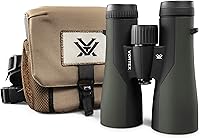
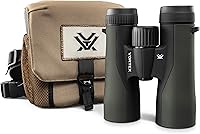
Vortex Diamondback HD 10x42 vs Crossfire HD 10x42: Which Is Better? (November 2026)
The Vortex Diamondback HD 10x42 is the better overall pick, while the Crossfire HD 10x42 suits shoppers who want the same core magnification and objective size in Mossy Oak Bottomland. Compare coatings, focusing, protection and carry details before choosing.
On this page (11 sections)
- Vortex Diamondback HD 10x42 vs Crossfire HD 10x42: quick verdict
- How do the two 10x42 binoculars compare side by side?
- Which binocular gives you the better view?
- Do both models gather light in the same way?
- Which one is easier to focus and use with glasses?
- Which binocular is better for carrying in the field?
- Which model handles outdoor conditions better?
- Which one is better for tripod or car window use?
- Who should buy the Diamondback HD 10x42?
- Who should buy the Crossfire HD 10x42?
- What is the final choice between these Vortex binoculars?
The Vortex Diamondback HD 10x42 is the better overall choice for most people, while the Crossfire HD 10x42 is the better fit for buyers who prefer Mossy Oak Bottomland. In this vortex diamondback hd 10x42 vs crossfire hd 10x42 comparison, both models use 10x magnification and 42mm objective lenses.
The Diamondback HD earns the higher score because its product details add a known 330-foot field of view, Armortek exterior lens protection and a named set of included carry and cleaning items. The Crossfire HD still offers HD optics, fully multi-coated lenses, a harness and rugged outdoor features.
Both binoculars use adjustable eyecups, center focus and a right-eyepiece diopter. That makes the choice less about basic operation and more about viewing width, finish, carry details and the trade-offs you value.


Vortex Diamondback HD 10x42 vs Crossfire HD 10x42: quick verdict
Choose the Diamondback HD 10x42 for the strongest all-around specification set. Its 10x magnification and 42mm objective lenses match the Crossfire HD, but the Diamondback adds a stated 330-foot field of view, 6.3-degree apparent angle of view and Armortek protection for exterior lenses.
Choose the Crossfire HD 10x42 if the Mossy Oak Bottomland finish is central to your buying decision. It keeps the same core optical format, uses fully multi-coated lenses and includes a GlassPak harness for carrying the binoculars in the field.
Neither model is a different magnification class. Both show 10 times magnification, so a distant subject appears about 10 times closer than it would to the unaided eye.
Both also use 42mm objective lenses, the front lenses that gather light.
That shared format works well for general outdoor viewing because it balances reach with a size that remains practical to carry. For a different comparison, see our guide to vortex diamondback hd 10x42 vs 12x50.
How do the two 10x42 binoculars compare side by side?
The Diamondback HD has more documented viewing and protection details, while the Crossfire HD emphasizes its finish and core HD format. The table shows the main differences without treating similar features as meaningful advantages.
| Feature | Vortex Diamondback HD 10x42 | Vortex Crossfire HD 10x42 |
|---|---|---|
| Magnification | 10x | 10x |
| Objective lenses | 42mm | 42mm |
| Lens coating | Fully multi-coated | Fully multi-coated |
| Field of view | 330 feet | Not stated in the supplied product details |
| Apparent angle of view | 6.3 degrees | Not stated in the supplied product details |
| Exit pupil | 4.2mm | 4.2mm |
| Focus | Center focus, manual | Center focus, manual |
| Eyepiece adjustment | Right-eyepiece diopter, +/-3 diopters | Right-eyepiece diopter |
| Eyecups | Twist up and down | Twist up and down |
| Weather protection | Argon purging and O-ring seals | Nitrogen purging and O-ring seals |
| Finish | Green | Mossy Oak Bottomland |
| Harness | GlassPak harness | GlassPak harness |
| Tripod use | Tripod adaptable | Tripod adaptable, tripod mount |
| Weight | 1.3 pounds | 2.45 ounces in the supplied specifications |
The weight entries deserve care because they are very different. The Crossfire specification gives 2.45 ounces, while the Diamondback specification gives 1.3 pounds.
Use the exact product information when comparing carry comfort, since a large weight gap changes how the binocular feels during a long walk.
Which binocular gives you the better view?
The Diamondback HD wins for buyers who want a documented wider viewing window. Its 330-foot field of view helps you see more area at a set distance, which is useful when following a moving bird or scanning a broad outdoor scene.
The Crossfire HD also uses 10x magnification and 42mm objective lenses. Those numbers give it the same basic reach and front-lens diameter as the Diamondback, so the two begin from a similar viewing format.
Field of view matters because stronger magnification can make it harder to find a moving subject. A wider view gives you more surrounding space, while a narrower view can make detailed tracking feel more demanding.
The Diamondback's 6.3-degree apparent angle of view adds another known viewing measure. If field coverage is a major part of your decision, the Diamondback has the clearer case.
Read our explanation of binoculars field of view before choosing based on this number. The key is to compare field of view at the same distance and understand whether you value broad scanning or a more focused look.
Do both models gather light in the same way?
Both use 42mm objective lenses and 4.2mm exit pupils, so their basic light-gathering format is closely matched. Their fully multi-coated lenses also use anti-reflective coatings on all air-to-glass surfaces.
The Diamondback HD uses select glass elements that Vortex describes as helping resolution, chromatic aberration control, color fidelity, sharpness and light transmission. Its dielectric coating is described as supporting bright, clear and color-accurate images.
The Crossfire HD also uses select glass elements for resolution, chromatic aberration control, color fidelity, edge-to-edge sharpness and light transmission. Its fully multi-coated lenses use multiple anti-reflective coatings on all air-to-glass surfaces.
A 4.2mm exit pupil is the circle of light that reaches your eye from the eyepiece. In daily use, both models present the same stated exit-pupil size, so this comparison does not produce a clear winner on that number.
Pick the Diamondback when you want its additional stated dielectric coating and color-focused details. Pick the Crossfire when its matching 10x42 format and Mossy Oak finish matter more than the extra optical information supplied for the Diamondback.
Which one is easier to focus and use with glasses?
Both binoculars use the same basic control layout, so either model suits eyeglass wearers who want adjustable viewing. Twist-up eyecups let you set the eyepiece position, while the center focus wheel adjusts both barrels together.
Each model also includes a diopter on the right eyepiece. The diopter accounts for differences between your eyes after you set the center focus, helping you create a clearer personal focus setting.
To set either binocular, start with the eyecups in the position that gives your glasses enough room. Close or cover the right side, focus the left side with the center wheel, then use the right-side diopter to balance the view.
Open both sides and make small center-wheel adjustments.
The Diamondback gives a diopter range of +/-3 diopters. The Crossfire data identifies the right-eyepiece diopter but does not give a matching range.
The controls are manual on both models. That keeps the process simple, but it also means you need to set focus yourself when moving between nearby and distant subjects.
Which binocular is better for carrying in the field?
The Diamondback HD has the stronger documented carry package, while the Crossfire HD offers the same useful GlassPak harness idea with a Mossy Oak finish. A harness keeps the binocular ready at your chest instead of requiring a hand to carry it all the time.
The Diamondback includes a GlassPak case harness, comfort neck strap, tethered objective lens covers, rainguard eyepiece cover and lens cloth. Those named items give it a more complete carry and care setup in the details.
The Crossfire HD includes a GlassPak binocular harness. Its product information also highlights quick optic deployment, protection and comfort, which suits hunters and outdoor users who want their binocular ready while moving.
Harness fit affects how quickly you can bring the binocular to your eyes. Adjust the straps so the optic sits securely without pressing into your chest, then keep the opening clear of clothing and other gear.
The Diamondback's stated weight is 1.3 pounds. The Crossfire's stated weight is 2.45 ounces, so the product data points to a major carry difference, though the figures should be treated as exact model specifications rather than assumed equivalents.
Which model handles outdoor conditions better?
Both binoculars are built for wet and foggy outdoor conditions, with sealed and purged designs. The Diamondback uses argon purging and O-ring seals, while the Crossfire uses nitrogen purging and O-ring seals.
Both models are described as water and fogproof. Both also have rubber armor that provides a non-slip grip and external protection, making them suited to outdoor handling where bare smooth surfaces can be harder to hold.
The Diamondback adds Armortek coating on the exterior lenses. That coating is described as protecting against scratches, oil and dirt, giving the Diamondback a specific lens-care advantage in the information.
The Crossfire HD uses a roof prism design, which is valued for durability and a more compact size. That design detail supports buyers who want a compact binocular form for outdoor carry.
Neither model should be treated as indestructible. Keep lens covers in place when the binocular is stored, use the lens cloth for the Diamondback when needed, and avoid wiping grit across either lens surface.
Which one is better for tripod or car window use?
Both models are tripod adaptable, so the Diamondback and Crossfire can suit steady viewing from a tripod or car window mount. The Crossfire specifications specifically identify a tripod mount, while the Diamondback data names tripod adaptability and car window mount use.
A mount helps when you watch one area for a long time. It also reduces hand movement when you are looking at a distant subject, reading detail or waiting for wildlife to appear.
The 10x magnification makes steadiness more useful than it would be with lower magnification. Small hand movements become easier to notice as magnification increases, especially when you hold the binocular away from your body.
Choose the Diamondback if the known field of view matters during mounted scanning. Choose the Crossfire if the stated tripod mount and Mossy Oak Bottomland finish fit your setup better.
Use a compatible mounting solution and follow its instructions. The binoculars are tripod adaptable, but the mount, window position and support surface still determine how steady the final view feels.
Who should buy the Diamondback HD 10x42?
Buy the Vortex Diamondback HD 10x42 if you want the best overall balance of view information, lens protection and carry accessories. Its higher 9.3 score reflects the stronger fit for general birding, travel and outdoor viewing.
The Diamondback suits readers who want a known 330-foot field of view for scanning. It also suits people who value a stated 6.3-degree apparent angle of view, dielectric coating and Armortek lens protection.
Its 10x magnification reaches distant subjects without changing the basic 42mm format. The 4.2mm exit pupil, adjustable eyecups and center focus support regular use, including viewing with eyeglasses.
The included GlassPak harness helps keep the binocular ready to deploy. The named case, neck strap, lens covers, rainguard cover and lens cloth also make the carry setup easier to understand.
Choose this model for a green finish and a 1.3-pound stated weight. If your priority is a broad, documented field of view and a fuller care package, the Diamondback is the clear pick.
Who should buy the Crossfire HD 10x42?
Buy the Vortex Crossfire HD 10x42 if Mossy Oak Bottomland is the finish you want and you still need a 10x42 binocular for outdoor use. Its 9.1 score places it behind the Diamondback overall, but it remains the better match for that specific style and use pattern.
The Crossfire uses select glass elements, fully multi-coated lenses and a roof prism design. It also has adjustable eyecups, center focus, a right-eyepiece diopter and 4.2mm exit pupil.
Its GlassPak harness supports quick access in the field. Tripod adaptability and the stated tripod mount make it a practical choice when you plan to use a steady support for longer observations.
Choose the Crossfire for a hunter or outdoor user who prefers Mossy Oak Bottomland. It also fits buyers who want the same 10x magnification and 42mm objective size as the Diamondback without choosing the green finish.
For more value-focused binocular comparisons, our guide to binoculars for the money puts features and use cases into a wider buying context.
What is the final choice between these Vortex binoculars?
The Diamondback HD 10x42 wins the vortex diamondback hd 10x42 vs crossfire hd 10x42 comparison for most readers. It has the higher score, a stated 330-foot field of view, more detailed optical information, Armortek lens protection and a more fully named carry package.
Pick the Crossfire HD 10x42 when Mossy Oak Bottomland is the deciding feature. Its 10x magnification, 42mm objective lenses, fully multi-coated lenses, roof prism design, GlassPak harness and tripod mount give it a strong outdoor-use profile.
The shared 10x42 format means neither is the wrong size class for general wildlife, travel or distance viewing. The final decision comes down to whether you value the Diamondback's documented field-of-view and protection details or the Crossfire's finish and stated mount format.
For the clearest all-around choice, buy the Diamondback HD 10x42. Choose the Crossfire HD 10x42 only when its Mossy Oak Bottomland finish and carry style fit your outdoor kit better.
Frequently asked questions
Are both binoculars suitable for eyeglass wearers?
Yes. Both models have adjustable eyecups that twist up and down for viewing with or without eyeglasses.
Both also use a center focus wheel and a right-eyepiece diopter, so you can set the viewing position and account for differences between your eyes.
Can you mount either binocular on a tripod?
Yes. Both binoculars are tripod adaptable, and the Crossfire HD lists a tripod mount.
A tripod or car window mount is useful when you want a steadier view for a long observation rather than holding the binoculars continuously.
Which binocular has the wider field of view?
The Diamondback HD has a stated field of view of 330 feet and an apparent angle of view of 6.3 degrees. A matching field-of-view figure is not included for the Crossfire HD here, so the Diamondback is the clear choice when that known viewing width matters.
Are the Diamondback HD and Crossfire HD fogproof?
Yes. The Diamondback HD uses argon purging and O-ring seals, while the Crossfire HD uses nitrogen purging and O-ring seals.
Both are described as water and fogproof for use across changing outdoor conditions.
Do both binoculars include a harness?
Yes. Both include a GlassPak harness.
The Diamondback details also name a GlassPak binocular case, comfort neck strap, tethered objective lens covers, rainguard eyepiece cover and lens cloth.