How to Carry Binoculars While Hiking
To carry binoculars while hiking, use a strap for short walks or a harness to keep them close on longer trails. Choose a chest pack for a covered pouch and room for small essentials.
On this page (8 sections)
- How to carry binoculars while hiking: which style fits your trail?
- How should you choose a hiking binocular carry system?
- How do you set up a harness before hiking?
- Which harness styles work for different hikers?
- How can you keep binoculars from bouncing on the trail?
- How should you protect binoculars from dirt and rain?
- What mistakes make binoculars harder to carry?
- How to carry binoculars while hiking: which setup should you pick?
To carry binoculars while hiking, choose a strap for simple access or a harness to hold them closer to your body. A chest pack makes sense when you want a covered pouch and space for small essentials.
The right setup depends on how often you stop to look, how rough the trail is, and what you already carry. Before setting out, check that the binoculars stay secure and can move into viewing position without snagging.
How to carry binoculars while hiking: which style fits your trail?
A harness is a useful starting point for longer hikes because it keeps binoculars close and can limit swinging. A neck strap suits short walks and quick viewing, while a chest pack adds a pouch around the binoculars.
A strap keeps binoculars easy to reach, but they may bounce when you step over rocks or climb. A harness carries their weight across your shoulders and helps keep them nearer your body.
A pouch-style harness covers the binoculars between stops. That can suit trails with dust, brush, or splashes, though you may need to open the pouch before viewing.
Consider how often you use your binoculars: extra coverage is useful only if the access remains practical for your pace.
How should you choose a hiking binocular carry system?
Match the carry style to your viewing habits, fit, and storage needs. A setup that stays in place with your backpack on is easier to manage than one that needs constant adjustment.
- Neck strap: choose it for a short, easy walk or frequent stops when direct access matters most.
- Harness strap: choose it to spread the load over your shoulders and reduce movement while walking.
- Pouch-style harness: choose it if you want binoculars covered between viewing stops.
- Chest pack: choose it if you also want a rain cover and room for small items.
Think about the binoculars you own before buying a pouch. A case can be secure and still be a poor choice if your binoculars do not fit or are awkward to raise from it.
For a closer comparison of comfort and movement, see binocular harness vs neck strap. If you are weighing other carry styles for outdoor use, our best binocular harness guide covers several options.
How do you set up a harness before hiking?
Attach both sides as directed, adjust the straps, and check the fit with your backpack on. The binoculars should stay close without making it hard to bring them to your eyes.
Tuck loose strap ends away from branches and pack straps. Walk a few steps, bend, and raise the binoculars to check for swinging, pressure points, or snags.
If the binoculars pull to one side or move too freely, adjust the fit and inspect each attachment. For a new strap, follow our guide on how to attach a strap to binoculars.
Inspect attachments before starting the hike, especially if a clip is loose or a strap is frayed.
Which harness styles work for different hikers?
Choose an open harness strap for quick access, or a pouch-style harness when you want the binoculars covered. A chest pack adds storage but also adds bulk and weight.
The Vortex Binocular Harness Strap uses adjustable nylon and Lycra straps that slide as you bring binoculars into viewing position. It suits hikers who want a simple carry without a pouch and prefer to keep their hands free while walking.
Skip this style if you want a built-in cover or storage for a phone and small accessories. Use a separate case when the binoculars need to be packed away.
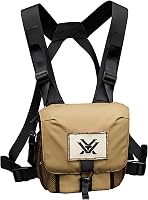
The Vortex GlassPak Harness accommodates a range of full-size binoculars and has two mesh side pockets, a rear zippered pocket, and binocular tethers. It suits hikers who want a pouch with quick-access storage, especially if they carry one of the compatible Vortex models.
Check the fit for your exact binocular model first. Other models are not guaranteed to fit, so this is a poor choice if you cannot confirm the pouch will hold yours securely.
The SPIKA Binocular Chest Pack has a rain cover, magnetic lid, four-point harness, and utility pocket. It suits hikers who want a covered carry with room for a rangefinder or a few small items.
At about 1.2 lb, it adds more weight than a simple strap or lighter harness. Skip it if you are keeping your pack weight low or do not need a pouch and extra storage.
The Leupold GO Afield Harness XF uses adjustable, non-elastic webbing to keep its pouch secure against your body. It may suit hikers who prefer a firm, close fit, but check that the pouch size works with your binoculars before you head out.
How can you keep binoculars from bouncing on the trail?
Adjust the carry system so the binoculars sit close to your chest and move with your body. A loose fit gives them more room to swing when you walk, climb, or bend.
Try the fit with your hiking pack on because shoulder straps can press against a harness or shift its position. Adjust the pack and harness together until neither catches or pushes the other out of place.
Use a pouch or cover when you do not need the binoculars in hand. Avoid letting them hang loose while scrambling or moving through dense brush, where they can swing into you or catch on branches.
How should you protect binoculars from dirt and rain?
Cover binoculars between viewing stops and dry damp gear after the hike. A pouch can add a layer between the optics and trail debris, while a rain cover can help protect a pack's contents from getting wet.
Close the pouch or case before walking through brush. If rain starts, use the carry system's cover if it has one, and follow the binoculars' own weather guidance.
After the hike, wipe away dirt and let damp fabric dry before storing it. Keep lens caps on when practical.
Avoid packing wet fabric tightly around the binoculars, and do not assume a harness makes them waterproof.
What mistakes make binoculars harder to carry?
The most common mistakes are choosing a pouch without checking fit, leaving straps loose, and carrying more storage than you need. Each can make access slower or the setup less comfortable on the trail.
- Buying before checking compatibility: match the pouch to your binocular model and size.
- Adjusting only before adding a backpack: pack straps can change the harness position.
- Leaving loose ends dangling: tuck them away so they do not catch on brush.
- Overpacking a chest pack: keep only items you want within reach, since the pack itself adds weight.
- Ignoring weather limits: a cover can help, but it does not replace care suited to your binoculars.
- Walking off without checking attachments: inspect clips, tethers, and straps before each hike.
How to carry binoculars while hiking: which setup should you pick?
Pick a neck strap for a short, easy hike, a harness strap for longer walks, and a chest pack when covered storage matters. If you want a pouch, confirm the fit with your binoculars and decide whether its added weight and storage suit your route.
Choose the Vortex Binocular Harness Strap for a simple, adjustable carry that lets binoculars slide into viewing position. Choose the Vortex GlassPak if your full-size binoculars are among its compatible models and you want pockets and tethers.
Choose the SPIKA pack for a covered pouch and room for small gear, or consider the Leupold harness if its close-fitting pouch suits your binoculars.
Check the attachments before every hike, then test the fit with your backpack on. For more options, compare our best binocular harness guide with the harness versus neck strap comparison.
Frequently asked questions
What is the best way to carry binoculars while hiking?
A binocular harness is a practical choice for many hikes because it holds binoculars close to your chest and can reduce swinging as you walk. A neck strap is easy to reach on short outings, while a chest pack adds a covered pouch and space for small items.
Choose based on how often you stop, the trail conditions, and how much extra gear you want to carry.
Should binoculars face up or down in a harness?
Follow the harness maker's instructions and check that the binoculars sit securely before walking. Keep the lenses covered when stored, and make sure the harness does not press a button or catch on clothing.
Adjust the fit so you can raise the binoculars smoothly without loosening an attachment.
Can I hike with binoculars around my neck?
Yes. A neck strap is simple to use, but binoculars can bounce against your chest on uneven trails.
A harness spreads the load over your shoulders and helps hold the binoculars closer to your body.
For a short, easy walk, a strap may be enough.
For longer hikes, consider a steadier carry.
How do I protect binoculars from rain while hiking?
Keep binoculars in a closed case or pack when you are not using them, and choose rain protection suited to the conditions. A cover can reduce exposure, but it does not change the binoculars' own weather limits.
After the hike, dry damp gear before storing it.