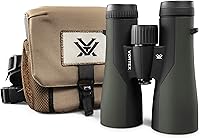
Vortex Diamondback HD 8x42 vs 10x50: Which Is Better? (November 2026)
Choose the Vortex Diamondback HD 8x42 for most people. It has a wider field of view and a lighter listed weight, while the 10x50 gives you more magnification and larger objective lenses for distance and dim scenes.
On this page (11 sections)
- Vortex Diamondback HD 8x42 vs 10x50: quick verdict
- How do the 8x42 and 10x50 compare side by side?
- What does 8x42 mean in daily use?
- What does 10x50 mean in daily use?
- Which one is better for finding moving birds?
- Which one works better in dim light?
- Which binocular is easier to carry with a harness?
- How do the focus and eyeglass adjustments compare?
- What protection and included equipment do both have?
- Who should buy the 8x42, and who should buy the 10x50?
- Which Vortex Diamondback should you choose?
Choose the Vortex Diamondback HD 8x42 for most people because it is lighter and gives you a wider view. Choose the Vortex Diamondback HD 10x50 when distant subjects, higher magnification and larger objective lenses matter more than carry comfort.
The main Vortex Diamondback HD 8x42 vs 10x50 choice is between a broad, easier-to-follow view and a closer-looking image. Both models use fully multi-coated lenses, dielectric coating, Armortek exterior lens protection, center focus and adjustable eyecups.
Both are also argon purged, sealed with o-rings and built with rubber armor. Each includes a GlassPak harness, and both are tripod adaptable for a tripod or car window mount.


Vortex Diamondback HD 8x42 vs 10x50: quick verdict
The 8x42 wins overall for birding, travel and general wildlife viewing. Its 393-foot field of view is 78 feet wider than the 10x50's 315 feet, so it gives you more room to locate and follow a moving subject.
The 10x50 wins for distance. Ten times magnification makes a far subject look larger than it does through 8x magnification, and the 50mm objective lenses are the better fit for open-country viewing and dimmer scenes.
That advantage has a cost in the numbers that affect carrying and scanning. The 10x50 is listed at 1.9 pounds and measures 6.6 inches in length, while the 8x42 is listed at 8 ounces and measures 5.7 inches in length.
Neither model is the automatic choice for every use. Pick the 8x42 if you spend more time finding subjects, walking with binoculars or sharing them with other people.
Pick the 10x50 if you usually watch from a fixed position and need more reach.
How do the 8x42 and 10x50 compare side by side?
The 8x42 is wider and lighter; the 10x50 is stronger for scale and uses larger objective lenses. The table shows the core differences without treating one set of numbers as better for every viewer.
| Product | Best for | Magnification | Objective lenses | Field of view | Our score |
|---|---|---|---|---|---|
| Vortex Diamondback HD 8x42 | most birders | 8x | 42mm | 393 feet | 8.8 |
| Vortex Diamondback HD 10x50 | distance and dusk | 10x | 50mm | 315 feet | 8.5 |
The 8x42 has an apparent angle of view of 7.5 degrees, compared with 6 degrees for the 10x50. That difference matches the practical field-of-view gap: 393 feet at 1,000 yards for the 8x42 and 315 feet for the 10x50.
Both models have 17mm of eye relief, so the basic eye-position measurement is the same. Both also use manual center focus with a diopter on the right eyepiece for adjusting differences between your eyes.
The models share a 5mm-class exit pupil. The 8x42 is listed at 5.25mm, while the 10x50 is listed at 5mm.
That makes the 8x42 slightly more forgiving when your eye position shifts.
What does 8x42 mean in daily use?
An 8x42 binocular gives you 8x magnification with 42mm objective lenses. It is the more balanced format when you need to scan, track and carry binoculars through changing locations.
Eight times magnification gives a stable-looking view for many handheld situations. It does not enlarge a distant subject as much as 10x magnification, but the wider 393-foot field makes it easier to find the subject in the first place.
The 42mm objective lenses keep the format smaller than the 50mm option. The 8x42 measures 5.7 inches in length and is listed at 8 ounces, making it the natural choice for a harness that you wear during long walks.
Its 5.25mm exit pupil also supports a forgiving viewing position. Adjust the eyecups to suit your eyes, then use the center focus wheel for both barrels and the right-side diopter for the difference between your eyes.
For another 8x42 comparison, see the Nikon Monarch M5 8x42 Review. If you are comparing formats within the same brand, the Vortex Diamondback HD 8x42 vs 10x42 comparison gives you a closer match.
What does 10x50 mean in daily use?
A 10x50 binocular gives you 10x magnification with 50mm objective lenses. It suits distant wildlife, long-range observation and users who prefer more image scale from a fixed viewing position.
The extra 2x magnification makes distant details appear larger than through the 8x42. That can help when the subject stays far away, such as wildlife across open ground or a distant point on a landscape.
The 50mm objective lenses are also larger than the 8x42's 42mm lenses. They pair with a 5mm exit pupil and fully multi-coated glass, dielectric coating and Armortek exterior lens protection.
The trade-off is clear in the handling numbers. The 10x50 is listed at 1.9 pounds, measures 6.6 inches in length and has a 315-foot field of view.
It takes more room in a harness and shows less area at once.
Use the center focus wheel for both barrels, then set the right-eyepiece diopter to match your eyes. The adjustable eyecups work with or without eyeglasses.
The Vortex Crossfire HD 12x50 Review is useful if you are considering even more magnification with 50mm objective lenses.
Which one is better for finding moving birds?
The Vortex Diamondback HD 8x42 is better for moving birds. Its 393-foot field of view gives you more space to locate a bird after it enters the scene and to keep it visible as it moves.
The 8x42 also has a 7.5-degree apparent angle of view. The 10x50 has a 6-degree apparent angle, so the view feels more concentrated around the center.
That does not make the 10x50 unsuitable for birds. It makes the format more dependent on your ability to point accurately and keep the subject in view at higher magnification.
The choice changes in open habitat. If birds are far across a field and move slowly, the 10x50's 10x magnification can show a larger image.
If birds move between branches, shrubs or nearby trees, the 8x42's wider view is more useful.
A harness helps keep either binocular close to your body between observations. With the 8x42, the listed 8-ounce weight also reduces the carry burden during a long walk.
Which one works better in dim light?
The Vortex Diamondback HD 10x50 has the stronger objective-lens advantage for dim scenes. Its 50mm objective lenses are larger than the 8x42's 42mm lenses, giving the 10x50 the better fit when light gathering is a priority.
Both models use fully multi-coated lenses with anti-reflective coatings on all air-to-glass surfaces. Both also use dielectric coating for bright, clear, color-accurate images.
The exit-pupil numbers add a small counterpoint. The 8x42 is listed at 5.25mm, and the 10x50 at 5mm.
The 8x42 therefore has the slightly larger exit pupil, which can make eye placement more forgiving.
In practical terms, the 10x50 is the choice when the larger front lenses and higher magnification match your viewing time. The 8x42 is the choice when quick handling and a forgiving view matter more than the largest objective lens.
Neither model should be judged by objective size alone. Magnification, field of view, exit pupil and how steadily you hold the binocular all shape the view you get.
Which binocular is easier to carry with a harness?
The 8x42 is easier to carry in the GlassPak harness. Its listed weight is 8 ounces, compared with 1.9 pounds for the 10x50, and its listed length is 5.7 inches instead of 6.6 inches.
That difference matters during travel, hiking and birding walks where the binocular hangs close to your chest for much of the day. A lighter binocular also takes less effort to bring up repeatedly when subjects appear and disappear.
The 10x50 still includes a GlassPak harness and has rubber armor for a secure, non-slip grip. Its added size and weight simply favor deliberate observation over constant movement.
Use the harness to keep the binocular supported when your hands are occupied. Adjust the strap so the binocular rests close to your body without blocking the center focus wheel or eyecups.
The rubber armor protects the exterior and improves grip, but it does not replace careful handling. Keep the lens covers in place when the binocular is stored and use the included lens cloth for routine cleaning.
How do the focus and eyeglass adjustments compare?
The focus controls are functionally the same on both models. Each has adjustable eyecups, a center focus wheel and a right-eyepiece diopter.
Twist the eyecups up or down to set the viewing position. Leave them down when you need room for eyeglasses, then raise them when you view without glasses if that gives you a more comfortable position.
The center focus wheel adjusts both barrels together. The diopter handles the difference between your eyes, so set it once for your vision and then use the center wheel for changing distances.
A simple setup order helps. Close your right eye, focus the left barrel with the center wheel, then close your left eye and adjust the right-eyepiece diopter.
Open both eyes and use the center wheel for normal viewing.
Both models have 17mm of eye relief. That shared measurement means the basic eyeglass-use specification does not separate them, so your decision should focus on field of view, magnification and carry weight.
What protection and included equipment do both have?
Both models are built for outdoor use and include the same type of core carry equipment. Each has rubber armor, argon purging, o-ring seals, a GlassPak harness and tripod adaptability.
Argon purging and o-ring seals provide water and fogproof performance. Rubber armor gives a non-slip grip and external protection, while Armortek coating protects the exterior lenses from scratches, oil and dirt.
Both are tripod adaptable for use on a tripod or car window mount. That is especially helpful for the 10x50, since a stable mount can make higher magnification easier to hold on a distant subject.
Each includes binoculars, a GlassPak binocular case, GlassPak case harness, comfort neck strap, tethered objective lens covers, a Rainguard Eyepiece Cover and lens cloth.
Vortex backs both models with its unlimited, unconditional, lifetime VIP Warranty. The warranty is transferable and covers repair or replacement for damage or defects, but it does not cover loss, theft, deliberate damage or cosmetic damage that does not hinder performance.
Who should buy the 8x42, and who should buy the 10x50?
Buy the 8x42 if you want one binocular for birding, travel and general outdoor viewing. Its wider field, lighter listed weight and smaller format make it the better match for active use.
Choose the 8x42 when you often:
- Track birds that move between nearby branches.
- Walk with the binocular in a harness.
- Share the binocular with different users.
- Need a broad view to locate subjects quickly.
- Prefer 8x magnification for steadier handheld viewing.
Buy the 10x50 if distance and dim scenes are your main priorities. Its 10x magnification and 50mm objective lenses make more sense when you observe from one position across open ground.
Choose the 10x50 when you often:
- Watch wildlife at longer distances.
- Observe across fields, water or open country.
- Prefer a larger image over a wider search area.
- Use a tripod or car window mount.
- Accept 1.9 pounds and a 6.6-inch length for more reach.
The Nikon PROSTAFF vs Monarch M5 8x42 Binoculars comparison can help if your shortlist has moved beyond the Diamondback models.
Which Vortex Diamondback should you choose?
The Vortex Diamondback HD 8x42 is the overall winner for most readers. It earns the higher score because its 393-foot field of view, 8-ounce listed weight and 5.25mm exit pupil make it easier to carry and use across more situations.
Choose the Vortex Diamondback HD 10x50 when your priority is clear: you want 10x magnification and 50mm objective lenses for distant subjects and lower-light viewing. Its narrower 315-foot field and 1.9-pound listed weight are real trade-offs, not flaws to ignore.
For a first binocular or a general birding harness, take the 8x42. For a fixed position overlooking open country, take the 10x50.
The final Vortex Diamondback HD 8x42 vs 10x50 decision is simple: pick 8x42 for most people, and pick 10x50 when distance and larger objective lenses come first.
Frequently asked questions
Is 8x42 or 10x50 better for birding?
The Vortex Diamondback HD 8x42 is the better general birding choice because its 393-foot field of view is wider than the 10x50's 315 feet. That extra viewing width helps you locate and follow birds, while the 10x50 suits distant birds in open spaces.
Which Vortex Diamondback has more light-gathering ability?
The Diamondback HD 10x50 has the larger objective lenses, measuring 50mm compared with 42mm on the 8x42. Both have fully multi-coated lenses and dielectric coating, while the 8x42 has the slightly larger 5.25mm exit pupil.
Can both Diamondback HD binoculars use a tripod?
Yes. Both the Vortex Diamondback HD 8x42 and 10x50 are tripod adaptable and can be used on a tripod or car window mount.
A stable mount is most useful when you want to hold a distant view for longer periods.
Which Diamondback HD binocular is easier to carry?
The 8x42 is the easier carry based on the listed measurements and weight. It is listed at 8 ounces, while the 10x50 is listed at 1.9 pounds and measures 6.6 inches in length compared with 5.7 inches for the 8x42.