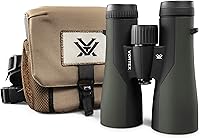
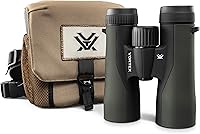
Vortex Diamondback HD 8x32 vs 10x32: Which Is Better? (November 2026)
Choose the Vortex Diamondback HD 8x32 for most people. Its wider 426-foot field of view and 16mm eye relief make it easier for birding, travel and moving subjects, while the 10x32 suits distant details.
On this page (12 sections)
- Vortex Diamondback HD 8x32 vs 10x32: quick verdict
- How do the two binoculars compare side by side?
- Which model is easier for finding moving subjects?
- When does the 10x32's extra magnification help?
- Which model gives you more comfortable eye relief?
- Does the 32mm objective size change the choice?
- How do the optics and focusing controls differ?
- Which one is better for travel and long walks?
- Are either binoculars ready for outdoor weather?
- Who should buy the Vortex Diamondback HD 8x32?
- Who should buy the Vortex Diamondback HD 10x32?
- Vortex Diamondback HD 8x32 vs 10x32: final choice
Choose the Vortex Diamondback HD 8x32 for most viewers. In the vortex diamondback hd 8x32 vs 10x32 comparison, the 8x32 wins overall with a wider view and more eye relief, while the 10x32 wins for distant detail and lower carry weight.
Both models use 32mm objective lenses and the same 8.1-degree or 6.5-degree apparent angle of view distinction built into their optical designs. The main choice is not lens size.
It is how much magnification you want and how easily you need to find subjects in the frame.
We compared the stated optics, dimensions, weight, focusing controls and included accessories. The practical decision is simple: choose the 8x32 for scanning and general use, or the 10x32 when extra reach matters most.

Vortex Diamondback HD 8x32 vs 10x32: quick verdict
The Vortex Diamondback HD 8x32 is the better pick for most people. Its 8x magnification is easier to hold steady, and its 426-foot field of view gives you more room to locate birds, wildlife and moving subjects.
The Vortex Diamondback HD 10x32 earns the specialist pick for distant detail. Its 10x magnification enlarges the subject more, but its field of view narrows to 312.5 feet and its eye relief drops to 14mm.
The 8x32 also carries the higher score at 8.3, compared with 8.1 for the 10x32. Our score weighs specs, features and buyer feedback against what you're shopping for.
Choose the 8x32 if you spend more time scanning than studying one fixed subject. Pick the 10x32 if you already know that extra magnification will matter more than a broad, forgiving view.
How do the two binoculars compare side by side?
The 8x32 favors a wider, easier view, while the 10x32 favors reach and lower weight. Their shared 32mm objective lenses keep the comparison focused on magnification, viewing geometry and handling.
| Product | Best for | Magnification | Objective lenses | Field of view | Our score |
|---|---|---|---|---|---|
| Vortex Diamondback HD 8x32 | most viewers | 8x | 32mm | 426 feet | 8.3 |
| Vortex Diamondback HD 10x32 | distant detail | 10x | 32mm | 312.5 feet | 8.1 |
The 8x32 weighs 15.9 ounces and measures 4.6 inches long by 4.4 inches wide. The 10x32 weighs 9.6 ounces and measures 5 inches long by 4.4 inches wide.
The weight difference is substantial on paper, but balance and grip still affect comfort. The 8x32 has rubber armor for a secure, non-slip grip, and the 10x32 has the same rubber-armored design.
Both use center focus. The center focus wheel adjusts both barrels together, while the diopter on the right eyepiece accounts for differences between your eyes.
Which model is easier for finding moving subjects?
The Vortex Diamondback HD 8x32 is easier for finding birds and other moving subjects. Its 426-foot field of view gives you more visible scene width than the 10x32's 312.5 feet.
A wider field helps when you raise the binoculars after looking at a bird with your unaided eyes. You have more room to acquire the subject without making large side-to-side corrections.
The 8x32 also uses 8x magnification. That lower power usually makes small hand movements less obvious, so the view feels more forgiving when you're standing, walking or following activity.
This does not make the 10x32 unsuitable for birding. It simply makes the 10x32 a better fit for a viewer who is comfortable locating the subject first and then using the extra power to study it.
For more detail on how this measurement affects your view, read our guide to binoculars field of view.
When does the 10x32's extra magnification help?
The Vortex Diamondback HD 10x32 is the better choice when distant detail is the main goal. Ten times magnification makes a faraway subject appear larger than it does through an 8x binocular from the same position.
That extra reach can help when you watch distant wildlife, inspect a far ridge or study details that are difficult to distinguish at 8x. The trade-off is a narrower 312.5-foot field of view.
Higher magnification rewards a steady hold. Rest your elbows against your body, use a nearby support when available and focus carefully before studying fine detail.
The 10x32 is also the lighter model at 9.6 ounces. That makes it attractive to hikers and travelers who want more magnification without carrying a heavier full-size binocular.
Its 5-inch length is slightly greater than the 8x32's 4.6 inches. Both are 4.4 inches wide, so the 10x32's carry advantage comes mainly from weight rather than a smaller overall footprint.
Which model gives you more comfortable eye relief?
The Vortex Diamondback HD 8x32 gives more eye relief at 16mm. The 10x32 provides 14mm, so the 8x32 leaves more distance between your eyes and the eyepieces.
Both models have adjustable eyecups that twist up and down. This lets you set the eyecups for viewing with or without eyeglasses.
Eye relief is especially useful when your glasses keep your eyes farther from the eyepieces. More relief gives you more room to position your eyes while still seeing the full image.
The 8x32 is therefore the safer pick for shared use, eyeglass wearers and people who prefer a less exact eye position. The 10x32 remains suitable when its higher magnification is more important and 14mm feels comfortable to you.
Set the eyecups to the position that gives you the complete image without dark edges. Then use the diopter to balance the focus for your right eye.
Does the 32mm objective size change the choice?
The shared 32mm objective size keeps both binoculars compact, but the magnification changes how that light is presented. The 8x32 has a 4mm exit pupil, while the 10x32 has a 3.2mm exit pupil.
The exit pupil is the small circle of light you see when you hold binoculars away from your eyes. A larger exit pupil is generally easier to align with, while a smaller one can feel less forgiving if your eyes move away from the ideal position.
The 8x32's 4mm exit pupil supports its easy, all-purpose viewing character. The 10x32's 3.2mm exit pupil pairs with its higher power and more focused view.
Neither model is a large-objective low-light specialist. Both use 32mm objective lenses, so they remain aimed at a compact balance between carry size and viewing ability.
For another Vortex comparison with larger objective lenses and more reach, see our Vortex Diamondback HD 10x42 vs 12x50 guide.
How do the optics and focusing controls differ?
Both models use HD optics, fully multi-coated lenses and dielectric coating, so the main optical difference is viewing geometry rather than a different coating package. Armortek coating protects the exterior lenses from scratches, oil and dirt.
The 8x32 uses select glass elements to deliver resolution, reduce chromatic aberration and provide color fidelity, sharpness and light transmission. The 10x32 uses the same stated optical approach.
Fully multi-coated lenses place anti-reflective coatings on all air-to-glass surfaces. Dielectric coating supports bright, clear and color-accurate images.
Center focus makes either binocular straightforward to adjust for changing distances. Start by focusing the left barrel with the center wheel, then use the right-eyepiece diopter to balance the other eye.
After that, the center wheel handles normal distance changes.
This setup favors active use. You can move from a nearby subject to a distant one without adjusting each barrel separately.
Which one is better for travel and long walks?
The Vortex Diamondback HD 10x32 is the lighter travel pick, while the 8x32 is the easier viewing pick. At 9.6 ounces, the 10x32 is 6.3 ounces lighter than the 8x32.
That difference matters when binoculars spend hours around your neck or in a day bag. The 10x32 also keeps the compact 32mm objective size while adding 10x magnification.
The 8x32 answers a different travel need. Its wider field makes street scenes, landmarks, birds and moving subjects easier to find, and its 16mm eye relief gives more positioning room.
Both models include a deluxe carry case with a case strap, a comfort neck strap, tethered objective lens covers, a rainguard eyepiece cover and a lens cloth. Neither includes a harness.
If you want to compare compact binocular choices by use and budget, our guide to binoculars for the money is a useful next step.
Are either binoculars ready for outdoor weather?
Both models are built for outdoor use with water and fog proof performance, rubber armor and rugged construction. Argon purging and O-ring seals support the water and fog proof design.
The rubber armor gives each binocular a secure, non-slip grip and external protection. The 8x32 and 10x32 are also tripod adaptable, so either can be used with a compatible tripod or car window mount.
Use the tethered objective lens covers and rainguard eyepiece cover when the binoculars are stored or carried through dusty, wet conditions. Keep the lenses covered when you are not viewing.
After outdoor use, brush away loose dirt before wiping the glass. Use the included lens cloth for normal cleaning, and keep the cloth free of grit that could mark the exterior lens coating.
The shared outdoor build makes either model suitable for birding, travel and distance viewing. The choice still comes down to the view you prefer, not a different weather-readiness package.
Who should buy the Vortex Diamondback HD 8x32?
Buy the Vortex Diamondback HD 8x32 if you want one compact binocular for general viewing. It is the stronger choice for birding, group use, moving subjects and eyeglass wear because of its 426-foot field of view and 16mm eye relief.
The 8x power is also easier to control for many handheld viewing situations. You can scan a wider area, find a subject faster and keep the view more stable while standing.
Its 15.9-ounce weight is the real trade-off. It is heavier than the 10x32, so travelers who count every ounce may prefer the lighter model.
The 8x32 includes the same main carry accessories as the 10x32, including the case, case strap, neck strap, lens covers and cloth. It does not include a harness, so plan your carry method separately.
Who should buy the Vortex Diamondback HD 10x32?
Buy the Vortex Diamondback HD 10x32 when distant detail and low carry weight matter most. Its 10x magnification gives more reach, and its 9.6-ounce weight is much easier to carry for long periods.
The cost of that reach is a narrower field of view at 312.5 feet. You also get 14mm of eye relief instead of the 8x32's 16mm, so positioning your eyes can feel more exact, especially with glasses.
The 10x32 has a 3.2mm exit pupil and includes low light technology. Its 32mm objective lenses keep the design compact, but this is still a higher-power binocular that rewards a steady hold.
It works with tripods and comes with a deluxe carry case, case strap, comfort neck strap, tethered objective lens covers, a rainguard eyepiece cover and a lens cloth. It does not include a harness.
Vortex Diamondback HD 8x32 vs 10x32: final choice
The Vortex Diamondback HD 8x32 wins overall for most readers. Its higher 8.3 score, wider 426-foot field of view and 16mm eye relief make it the more flexible choice for birding, travel and everyday outdoor viewing.
Choose the Vortex Diamondback HD 10x32 if your main reason for carrying binoculars is seeing distant detail. Its 10x magnification and 9.6-ounce weight are strong advantages when reach and light carry matter more than easy subject finding.
The decision rule is clear: pick 8x32 for a wider, steadier and more forgiving view; pick 10x32 for extra magnification in a lighter body. For the vortex diamondback hd 8x32 vs 10x32 question, the 8x32 is the best general pick, and the 10x32 is the focused long-distance alternative.
If you want to compare another model before deciding, read our Vortex Crossfire HD 12x50 review.
Frequently asked questions
Are 8x32 or 10x32 binoculars better for birding?
The Vortex Diamondback HD 8x32 is the better birding choice for most people because its 426-foot field of view makes it easier to find and follow moving birds. Pick the 10x32 when distant detail matters more than a wide view.
Which Vortex Diamondback has the wider field of view?
The Vortex Diamondback HD 8x32 has the wider field of view at 426 feet. The Vortex Diamondback HD 10x32 covers 312.5 feet, so the 8x32 shows more of the scene at the same distance.
Is the Vortex Diamondback HD 10x32 lighter?
Yes. The Vortex Diamondback HD 10x32 weighs 9.6 ounces, while the 8x32 weighs 15.9 ounces.
That makes the 10x32 the lighter option for carrying, although weight is only one part of handling comfort.
Can you use either binocular on a tripod?
Yes. Both Vortex Diamondback HD models are tripod adaptable.
A compatible tripod adapter and a stable tripod can help when you want a fixed view for extended observation.
Do these binoculars include a harness?
No. Neither model includes a harness.
Both include a deluxe carry case, case strap, comfort neck strap, tethered objective lens covers, a rainguard eyepiece cover and a lens cloth.