Bushnell vs Vortex Binoculars: Which Fits You? (November 2026)
Pick Bushnell for the lowest price on big 10x50 glass, and Vortex for better coatings, sealing and a lifetime warranty. Your budget and how hard you use the binoculars decide the Bushnell vs Vortex binoculars question faster than any spec sheet.
On this page (10 sections)
- Bushnell vs Vortex side by side
- The first decision: how much do you want to spend?
- Optics and coatings: what the extra money buys
- Eye relief and comfort for glasses
- Weather sealing and build quality
- Weight and carrying all day
- Warranty and long-term ownership
- Magnification and field of view
- Who should buy which brand?
- The verdict: Bushnell or Vortex?
Pick Bushnell for the lowest price on big 10x50 glass, and Vortex for better coatings, sealing and a lifetime warranty. Your budget and how hard you use the binoculars decide the Bushnell vs Vortex binoculars question faster than any spec sheet.
Both brands cover the same ground: 10x50 porro-prism binoculars on one side, sealed HD roof-prism glass on the other. Here is how the Falcon, the PowerView, the Triumph HD and the Crossfire HD differ, and who each one suits.


Bushnell vs Vortex side by side
Bushnell sells the budget end and Vortex the mid-range, so the gap is mostly in the glass and the warranty. The table below lines up the two brands through four real models.
| Feature | Bushnell Falcon 10x50 | Bushnell PowerView 10x50 | Vortex Triumph HD 10x42 | Vortex Crossfire HD 12x50 |
|---|---|---|---|---|
| Price tier | Budget | Budget | Mid-range | Mid-range |
| Magnification | 10x | 10x | 10x | 12x |
| Objective lens | 50 mm | 50 mm | 42 mm | 50 mm |
| Prism | Porro, BK7 | Porro, BK7 | Roof, HD | Roof, HD |
| Coating | Fully coated | Multi-coated | Fully multi-coated | Fully multi-coated |
| Field of view | 300 ft | 113.2 ft | 0.67 degrees | 273 ft |
| Eye relief | 9 mm | 10 mm | 17 mm | 15 mm |
| Weight | 830 g | 0.11 kg | 0.45 kg | 1.8 lb |
| Weather sealing | Rubberized grip | Rubber armor | Waterproof, fog proof | Waterproof, fog proof |
| Warranty | Standard | Standard | Lifetime VIP | Lifetime VIP |
The Bushnell field-of-view figures are written differently on each model, so compare them loosely rather than treating them as a straight match. What the table does show clearly is the eye relief, sealing and warranty gap between the brands.
The two Bushnell models sit at 9.7 and 9.6 on our score, with the Vortex pair at 9 and 8.6. Our score weighs specs, features and the job each binocular is built for against what you're shopping for.
The exit pupil tells you why the light gap matters. Both 50 mm models at 10x put out a 5 mm exit pupil, which matches what a dark-adapted eye can take in.
The 10x42 Triumph drops to 4.2 mm, so it gives up some low-light brightness in exchange for a smaller, lighter body.
The first decision: how much do you want to spend?
Bushnell gets you into full-size 10x50 viewing for the least money, and Vortex asks you to pay more for better glass and seals. Set your upper limit before you read any model name.
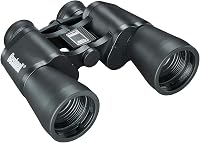
At the bottom, the Bushnell Falcon offers a 10x50 porro-prism binocular with fully coated optics and the InstaFocus system. Nothing in the Vortex range matches that starting point.
The Vortex Triumph HD and Crossfire HD both sit a tier up, with HD optical systems and fully multi-coated lenses. You pay for the coating work, the sealing and the warranty that comes with them.
If you plan to use the binoculars a handful of weekends a year, the Bushnell math is easy. If you want one pair to last a decade of hard use, the Vortex tier makes more sense.
When the budget pick settles it
Buy the Bushnell Falcon when the price is the deciding factor and you want a bright 50 mm objective. It also suits a first binocular for a child or a spare pair to keep in the truck.
When the mid-range pick settles it
Choose the Vortex Triumph HD when you want sealed glass and a warranty you won't have to think about. Its 17 mm eye relief also helps anyone who wears glasses.
When both Bushnell models compete
If your budget caps you at the Bushnell tier, the Falcon and PowerView are close. The Falcon gives you the wider 300-foot field and plain black armor, which suits stadiums, travel and a general all-rounder.
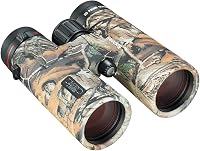
The PowerView trades field width for multi-coated BK7 glass and Realtree AP camouflage. Its tripod socket is the tie-breaker for hunters who want to mount the binocular on a stand or window mount.
Optics and coatings: what the extra money buys
Vortex's HD optical systems and fully multi-coated lenses deliver better color and edge sharpness than the Bushnell coated glass. Bushnell still puts up a bright image for the price, especially with 50 mm objectives.
The Falcon uses fully coated optics with BK7 porro prisms. The PowerView steps up to multi-coated BK7 glass, which cuts reflections a little better than the Falcon.
The Vortex pair use HD optical systems with fully multi-coated lenses on every air-to-glass surface. Vortex says the glass elements are chosen to cut chromatic aberration and hold edge-to-edge sharpness.
That difference shows up most in low light and against high-contrast edges. A branch line at dusk separates the two tiers more clearly than a bright midday field.
Porro prism versus roof prism
The Bushnell binoculars here are porro prism, with the wide, offset barrel shape that comes with it. They tend to feel bulkier in the hand.
The Vortex Triumph and Crossfire use roof prisms for a straighter, more compact body. That shape is easier to carry in a pack and easier to hold steady over time.
Light gathering from 42 mm and 50 mm
A 50 mm objective gathers more light than a 42 mm one, so the Bushnell pair and the 12x50 Crossfire have an edge in dim conditions. The Triumph HD's 10x42 build trades some of that light for a smaller, lighter body.
Field of view in real terms
The Falcon's 300-foot figure is the widest field here, and it helps you find a bird or a moving animal before you bring the binocular up. The Crossfire HD shows 273 feet, so 12x narrows the view as it pulls targets closer.
The PowerView lists 113.2 feet and the Triumph lists 0.67 degrees. Those numbers are written in different units, so don't rank them against each other without converting first.
Eye relief and comfort for glasses
The Vortex pair is the clear choice for eyeglass wearers, thanks to 17 mm and 15 mm eye relief and twist-up eyecups. The Bushnell models give you 9 mm and 10 mm with fold-down cups.
Eye relief is the distance your eye can sit from the lens and still see the full field. Short relief forces glasses wearers to press closer, which rarely feels comfortable.
The Falcon and PowerView use fold-down rubber eyecups. That helps, but 9 and 10 mm of relief is tight for most frames.
The Triumph HD's adjustable rubber eyecups and the Crossfire's twist-up cups let you set the cup out when you wear glasses and in when you don't. Both also have a diopter to fine-tune for a difference between your eyes.
Who should prioritize eye relief
If you keep your glasses on while glassing, start with the Vortex Triumph HD. If you shoot without glasses and want the biggest view for the money, the Bushnell pair is fine.
The diopter matters more than shoppers expect. The Vortex models let you set each barrel to your own eyes, while the Bushnell pair leaves the adjustment to the focus system alone.
If your eyes differ noticeably, that is one more point for Vortex.
Weather sealing and build quality
Vortex wins here outright: both models are nitrogen purged, waterproof and fog proof, and the Bushnell pair relies on rubber armor rather than sealed optics. For wet or cold hunts, that is the deciding feature.
The Triumph HD has a polycarbonate chassis with full rubber armor and a shockproof rating. The Crossfire HD uses an aluminum body with rubber armor and o-ring seals.
The Bushnell Falcon and PowerView lean on their rubberized finishes for grip and a little shock protection. That covers knocks, but it doesn't give you the same confidence in rain or heavy fog.
Both Bushnell models have their fans, and our Bushnell binoculars overview covers where that brand still earns its place.
Field use in wet and cold conditions
A fogged lens ends a session. If you glass in cold mornings or wet weather, a nitrogen-purged binocular is worth the extra money.
How the two Vortex bodies differ
The Triumph HD's polycarbonate chassis is the lighter of the two, and Vortex markets the shockproof rating around it. The Crossfire HD's aluminum housing is built to shrug off recoil and impact.
If you hunt from a truck or a stand where the binocular gets knocked around, the aluminum body is the sturdier story.
Weight and carrying all day
The Triumph HD is the easiest to carry all day at 0.45 kg, while the Crossfire HD is the heaviest here at 1.8 lb. Weight matters most if the binoculars hang from your neck for hours.
The Bushnell Falcon comes in at 830 g. The PowerView figure is written as 0.11 kg, which is very light for a full-size porro binocular, so treat that number as a starting point before you order.
A heavy binocular pulls on the neck and adds shake. A harness spreads the load across your chest and keeps the glass close, which makes a bigger binocular easier to live with.
The Triumph HD ships with a GlassPak harness in the box. The Crossfire HD includes a GlassPak case, and you can add a harness to any of the four.
Warranty and long-term ownership
Vortex backs its binoculars with an unlimited, unconditional, lifetime VIP warranty that transfers to a new owner; Bushnell sells on a standard warranty. If you keep gear for years, this is Vortex's strongest argument.
Vortex promises to repair or replace an item that becomes damaged or defective. The promise doesn't cover loss, theft, deliberate damage or cosmetic wear that doesn't affect performance.
That transferable promise also helps if you sell the binoculars later. Buyers pay more for gear with a warranty that follows the product.
Bushnell's value case rests on price. If a warranty claim is unlikely to matter to you, the Bushnell savings are real.
Comparing the brands beyond these four
The warranty question is one reason shoppers compare Vortex with other mid-range brands. Our look at whether Leupold binoculars are good sets out another sealed, warranty-backed option.
Magnification and field of view
The 10x models are the safer all-round choice; the 12x Crossfire HD is for open country and distant animals. More power isn't automatically better.
At 10x you get a steadier image and a wider view, which helps you find a moving animal before you look closely. The Falcon's 300-foot field at 1,000 yards is generous for a budget binocular.
The Crossfire HD's 12x50 pulls far targets closer and keeps a 273-foot field. That power shows more hand shake unless you brace or mount it on a tripod, and both Vortex models are tripod adaptable.
10x versus 12x in practice
Pick 10x for woods, birds, stadiums and general use. Pick 12x for wide-open terrain where targets sit far away and you can rest your elbows.
What the Bushnell focus systems mean for moving targets
The Falcon's InstaFocus system is built for fast focus on moving subjects. The PowerView uses its own Instafocus setup with center focus and a folding roof prism design.
For a bird flushing or a running back, the ability to snap the image sharp without hunting for a wheel matters more than a marginal coating upgrade.
Who should buy which brand?
Buy Bushnell if the price is the priority and you want a bright 10x50 binocular without spending much. Buy Vortex if you glass in bad weather, wear glasses or want a lifetime warranty.
Here is the short version, model by model.
Best for a first binocular
The Bushnell Falcon 10x50 is the pick. It's cheap, bright and easy to focus, which makes it a low-risk way to learn what you like.
Best for glasses and wet weather
The Vortex Triumph HD 10x42 wins on both counts. The eye relief and sealing are simply in a different class from the Bushnell pair.
Best for hunters on a budget
The Bushnell PowerView 10x50 is the value hunting pick, with Realtree AP camo, multi-coated optics and a tripod socket.
Best for open-country glassing
The Vortex Crossfire HD 12x50 gives you the most reach here. Mount it on a tripod for the steadiest image.
What about Athlon?
Athlon is the other brand shoppers weigh against Vortex at this price. Our Athlon vs Vortex comparison and the question of whether Athlon binoculars are good cover that match-up.
The verdict: Bushnell or Vortex?
For most readers who want one binocular to keep for years, the Vortex Triumph HD 10x42 is the overall winner in this Bushnell vs Vortex binoculars comparison. It pairs sealed HD glass and long eye relief with a transferable lifetime warranty at a mid-range price.
Buy the Bushnell Falcon 10x50 if the budget is tight and you want the most view for the least money. Step up to the PowerView for camo and multi-coated glass if you hunt.
Choose the Vortex Crossfire HD 12x50 only if you need 12x reach and will brace or mount it. For everything else, the 10x Triumph HD is the steadier, easier binocular.
The short rule: Bushnell for price, Vortex for longevity. Decide which one you value more, and the choice is quick.
Frequently asked questions
Are Vortex binoculars better than Bushnell?
Vortex generally gives you better lens coatings, full sealing and a transferable lifetime VIP warranty. Bushnell wins on price, so the better brand depends on whether you want the cheapest big glass or a long-term tool.
What is the Vortex VIP warranty?
It is an unlimited, unconditional, lifetime promise to repair or replace a damaged or defective binocular, and it transfers to a new owner. It does not cover loss, theft, deliberate damage or cosmetic wear that doesn't affect performance.
Which Bushnell binocular is best for hunting?
The PowerView 10x50 suits hunting best, with Realtree AP camouflage, multi-coated BK7 glass and a tripod socket. The Falcon 10x50 does the same job in plain black for less money.
Is 10x50 or 12x50 better for a first binocular?
Start with 10x50 unless you mostly watch distant animals. The lower power is easier to hold steady and shows a wider view, while 12x zooms in further but magnifies hand shake.