8 Best Binoculars for Elk Hunting (October 2026)
The best binoculars for elk hunting in open country include the Vortex Crossfire HD 12x50 for a balanced open-country pick, the Vortex Diamondback HD 10x50 for a wider scan, and the Vortex Diamondback HD 12x50 for detailed distant glassing.
On this page (5 sections)
The Vortex Crossfire HD 12x50 is our top pick for elk hunting in open country because it balances 12x magnification, 50 mm objective lenses and a tripod-adaptable design. If you scan wide areas first, the 10x50 Diamondback HD offers a broader stated field of view, while the 15x56 Diamondback HD is built for tripod-supported distance viewing.
Open-country elk hunting calls for glass that helps you scan ridges, benches and far slopes without making every look a struggle to steady. The right binoculars depend on how much magnification you want, how you carry them and whether you plan to glass from a tripod.
Our scores weigh listed features and specifications against the needs of open-country elk hunting. For more on choosing optics across outdoor uses, see our guide to the best binoculars for the money and our 10x42 binocular comparison.
Our picks at a glance
-
1

-
2

-
3
Which binoculars suit elk hunting in open country?
The best fit depends on whether you value a wider scan, more magnification or a lighter carry. These eight picks are ordered by score, with the Crossfire HD 12x50 leading for its mix of magnification, objective size and tripod adaptability.
Vortex Crossfire HD 12x50: Best for a balanced open-country pick
- 12x magnification
- 50 mm objective lenses
- 273 ft field of view
- Tripod adaptable
- Includes GlassPak binocular harness
The 12x view and tripod adaptability make this a flexible choice for scanning open slopes. Its included GlassPak harness keeps the binoculars ready to reach.
Pros
- 12x magnification with 50 mm objectives
- Tripod adaptable
- Includes GlassPak binocular harness
Cons
- Higher magnification can make handheld viewing less steady
- Less field of view than the 10x50 Diamondback HD
The Crossfire HD 12x50 is a versatile starting point for open terrain. Its 12x magnification and 50 mm objectives give you more reach than a 10x42 while keeping the configuration below the 15x56 models.
The stated field of view is 273 ft, and the binoculars are tripod adaptable. They weigh 1.8 lb and include a GlassPak binocular harness, which gives you a dedicated way to carry the optic close at hand.
The adjustable eyecups twist up and down for viewing with or without eyeglasses. Vortex also specifies nitrogen purging and o-ring seals for water and fogproof performance.
Pick this model if you want a 12x50 setup that can be carried in its included harness and mounted when a steadier view helps. For a closer look at this model's features, read our Vortex Crossfire HD 12x50 review.
Vortex Diamondback HD 10x50: Best for a wider scan
- 10x magnification
- 50 mm objective lenses
- 315 ft field of view
- Tripod adaptable
- Includes GlassPak harness
The 10x magnification and 315 ft field of view favor scanning a broad area. It is tripod adaptable and includes a GlassPak harness.
Pros
- Widest field of view in this group
- Tripod adaptable
- Includes GlassPak harness
Cons
- Heavier than the 10x42 McKenzie
- Lower magnification than the 12x and 15x options
The Diamondback HD 10x50 suits hunters who need to scan broad sections of a hillside. Its 315 ft field of view is the widest stated figure among the models here that report field of view in feet.
At 10x, it offers less magnification than the 12x and 15x picks, but that lower power can make it easier to cover more ground in one view. The 50 mm objectives and fully multi-coated lenses are designed to increase light transmission.
It weighs 1.9 lb, is tripod adaptable and includes a GlassPak harness. Those details make it a useful option for hunters who want broad scanning with the ability to mount the binoculars for a longer look.
Choose it if your first task is searching a wide area, then move to more magnification when you have a specific spot to inspect.
Vortex Diamondback HD 12x50: Best for detailed distant glassing
- 12x magnification
- 50 mm objective lenses
- 271 ft field of view
- Tripod adaptable
- Includes GlassPak harness
The 12x view brings more magnification than a 10x option while retaining 50 mm objectives. A tripod can help keep the image steady during longer glassing sessions.
Pros
- 12x magnification with 50 mm objectives
- Tripod adaptable
- Includes GlassPak harness
Cons
- Narrower field of view than the 10x50 Diamondback HD
- Higher magnification can be harder to hold steady
The Diamondback HD 12x50 offers 12x magnification and a 50 mm objective size, with a stated field of view of 271 ft. It is tripod adaptable and weighs 1.8 lb.
Compared with the 10x50 Diamondback HD, this model gives you more magnification but a narrower stated field of view. That tradeoff can suit hunters who spend more time checking distant terrain than sweeping a broad hillside.
Its adjustable eyecups, center focus wheel and right-side diopter provide familiar controls for setting the view to your eyes. The model also includes a GlassPak harness for carry.
Pick it when you want a 12x Diamondback HD and expect to use the tripod-adaptable design during longer sessions. If the extra magnification feels like too much for your usual terrain, our 10x42 binocular guide explains when a lower-power setup may be a better fit.
Vortex Triumph HD 12x50: Best for a lighter 12x50 setup

- 12x magnification
- 50 mm objective lenses
- 1.6 lb listed weight
- Tripod adaptable
- Includes adjustable GlassPak harness
This 12x50 weighs 1.6 lb and includes an adjustable GlassPak harness. Its tripod adaptability adds a stable viewing option for distant slopes.
Pros
- 12x50 format
- Lightest listed weight among these 50 mm models
- Includes adjustable GlassPak harness
Cons
- No field-of-view figure available here for comparison
- Higher magnification can be harder to hold steady
The Triumph HD 12x50 is the lightest listed 50 mm model in this roundup at 1.6 lb. It includes an adjustable GlassPak harness and is tripod adaptable.
Its fully multi-coated lenses and HD optical system are designed to support resolution and color fidelity. The nitrogen-purged binoculars are described as waterproof and fogproof, and the chassis has full rubber armor.
No field-of-view figure is available for comparison here, so buyers who prioritize a wide scan may prefer a model with a stated figure. The 12x power also makes stable positioning useful when you are looking at distant terrain for more than a quick check.
Choose it if low listed weight matters in a 12x50 format and you want an included harness. The stated 1.6 lb weight is lower than the other 50 mm models in this set.
Leupold BX-1 McKenzie 10x42: Best for a lighter 10x option

- 10x magnification
- 42 mm objective lenses
- Open bridge, roof prism design
- Waterproof and fogproof
This 10x42 pairs a broad stated field of view with a lightweight, open-bridge design. The listed weight is 0.27 g, so verify the exact shipping or model details before using weight as a deciding factor.
Pros
- 10x magnification for scanning
- 304 ft stated field of view
- Waterproof and fogproof
Cons
- 42 mm objectives are smaller than the 50 mm options
- Listed weight unit may need confirmation
The Leupold BX-1 McKenzie 10x42 is a lighter-format option with 10x magnification and a stated 304 ft field of view. Leupold describes it as an open-bridge roof-prism design and says it is waterproof and fogproof.
Its 42 mm objectives are smaller than the 50 mm objectives on most picks here. That can make it appealing if you prefer the 10x42 format and want a broad stated field of view, while hunters who prioritize larger objectives can compare it with the 10x42 vs 10x50 binocular guide.
The listed weight is 0.27 g, an unusual unit for binocular weight. Confirm the exact weight with Leupold or the retailer before making carry weight a deciding factor.
Pick this model if you want a 10x42 with open-bridge construction and a broad stated view. Check the weight detail before choosing it for a long day on foot.
Vortex Diamondback HD 15x56: Best for tripod-based long-range viewing
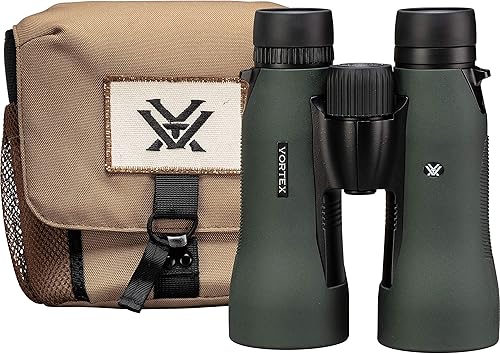
- 15x magnification
- 56 mm objective lenses
- Tripod adapter included
- 230 ft field of view
- Includes GlassPak harness
The 15x56 format is aimed at big country, and a tripod adapter is included. Vortex recommends tripod use to avoid handshake at this magnification.
Pros
- Highest magnification in this group
- 56 mm objective lenses
- Tripod adapter included
Cons
- Heaviest model in this group
- Tripod use is recommended to avoid handshake
The Diamondback HD 15x56 is the high-magnification choice for glassing big country from a stable position. Vortex recommends tripod use to avoid handshake, and a tripod adapter is included.
Its 15x magnification and 56 mm objectives are the largest in this roundup. The tradeoff is a 2.2 lb weight and a narrower 230 ft field of view than the 10x50 Diamondback HD.
This model is tripod adaptable, has fully multi-coated lenses and includes a GlassPak harness. Use the harness to carry it, then mount it when you need a steadier view across a distant slope.
Choose it if maximum reach is the priority and you are comfortable planning around a tripod. For handheld scanning, a 10x or 12x option is likely easier to use for quick checks.
Leupold BX-1 McKenzie 12x50: Best for 12x open-space viewing

- 12x magnification
- 50 mm objective lenses
- Waterproof and fogproof
- Open bridge, roof prism design
The 12x50 configuration suits open spaces where extra magnification is useful. Its listed field of view uses degrees, so compare it carefully with models stated in feet.
Pros
- 12x magnification with 50 mm objectives
- Waterproof and fogproof
- Open bridge design
Cons
- 2 lb listed weight
- Field-of-view unit is not directly comparable with feet
The Leupold BX-1 McKenzie 12x50 gives you 12x magnification with 50 mm objectives in an open-bridge roof-prism design. Leupold describes the model as waterproof and fogproof.
The listed field-of-view value is 41.67 degrees, unlike the feet used for several other models here. Since those units are not directly comparable, use the figure cautiously and confirm the specification if field of view is central to your choice.
At a listed 2 lb, it is heavier than the 12x50 Crossfire HD and Triumph HD. Its 12x power is suited to open spaces, where extra magnification can help you examine a distant patch of terrain.
Choose it if you want the Leupold 12x50 configuration and do not mind the weight. Compare the field-of-view format before weighing it against models that report feet.
Leupold BX-1 McKenzie 10x50: Best for a 10x low-light setup
- 10x magnification
- 50 mm objective lenses
- 5 mm exit pupil
- Waterproof and fogproof
This 10x50 combines a 5 mm exit pupil with waterproof and fogproof construction. The field-of-view figure is stated in degrees, so it is not directly comparable with models reported in feet.
Pros
- 10x magnification with 50 mm objectives
- 5 mm exit pupil
- Waterproof and fogproof
Cons
- Field-of-view unit is not directly comparable with feet
- No weight figure available here
The Leupold BX-1 McKenzie 10x50 pairs a broad 10x view with 50 mm objectives and a 5 mm exit pupil. Leupold describes it as waterproof and fogproof, with a fully multi-coated lens system.
The stated field-of-view figure is 5 degrees, so it cannot be compared directly with the values in feet shown for some other options. The 10x power can still be a useful middle ground for scanning before moving to a higher-magnification binocular for a closer look.
No weight figure is available here. If you plan to carry binoculars over long distances, check the weight and compare it with models that publish one before deciding.
Pick this model if you want 10x50 binoculars and value the stated exit pupil. Confirm the field-of-view unit and carry weight as part of your final comparison.
How much magnification helps when glassing for elk?
For many hunters, 10x or 12x binoculars are a useful starting point for open country. A 15x model can show more detail at distance, but it is harder to keep steady without support.
A wider field of view makes it easier to scan a broad slope, while higher magnification helps you examine a smaller area. The 10x50 Diamondback HD has a stated 315 ft field of view, compared with 273 ft on the 12x50 Crossfire HD and 230 ft on the 15x56 Diamondback HD.
Handheld steadiness also matters. If the image shakes, more magnification may make scanning less comfortable, so plan to brace against a pack, use a rest or bring a tripod.
Are 10x42 or 10x50 binoculars better for elk hunting?
Choose 10x42 binoculars when you want a 10x view in a smaller objective format, and consider 10x50 when larger objectives matter to your decision. The Leupold BX-1 McKenzie 10x42 has a listed 304 ft field of view, while the Diamondback HD 10x50 reports 315 ft.
Objective size alone does not tell you how bright an image will look in every situation. Lens coatings, viewing conditions, your eyes and how steady you hold the binoculars all affect what you see.
For more on the format tradeoffs, read our 10x42 vs 10x50 binoculars guide. It helps you compare those sizes before settling on a model.
When should you use a tripod for elk binoculars?
Use a tripod when higher magnification makes the view hard to hold steady or when you plan to glass for an extended stretch. The Diamondback HD 15x56 includes a tripod adapter, and several 12x models here are also tripod adaptable.
A tripod adds weight and takes time to set up, so it may not suit every short stop. For a quick scan or frequent movement, a 10x model may be simpler to bring to your eyes and use without mounting.
A harness can help keep binoculars ready between glassing stops. Our guide to the best binocular harness for hiking, birding and hunting covers carry options for keeping optics accessible.
How should you choose binoculars for elk hunting?
Choose by your usual terrain and how you glass. A 10x50 model with a broad stated field of view is a sound starting point for scanning, while a 12x50 offers more magnification and a 15x56 suits tripod-based distance viewing.
If you carry binoculars for long stretches, check weight and harness details alongside magnification. The Triumph HD 12x50 is the lightest listed 50 mm option here, while the 15x56 Diamondback HD is the heaviest and is recommended for tripod use.
For a broad overview of optic features, visit our binocular basics guide. Compare the listed field of view, objective size and carry setup, then choose the binoculars that match how you plan to glass.
Pick the Crossfire HD 12x50 for a balanced 12x setup with an included harness and tripod adaptability. Choose the 10x50 Diamondback HD for wider scanning, or the 15x56 Diamondback HD if you plan to glass from a tripod.
Our top 3 picks at a glance
-
1
-
2
-
3
Frequently asked questions
What magnification is best for elk hunting in open country?
For many open-country hunters, 10x or 12x binoculars are a practical starting point. A 10x view can make broad scanning easier, while 12x adds magnification for checking distant terrain.
Higher power can be harder to hold steady, so consider a tripod when glassing for long periods.
Are 15x binoculars good for elk hunting?
They can suit long-range glassing across large terrain, especially from a stable position. The Vortex Diamondback HD 15x56 includes a tripod adapter, and Vortex recommends tripod use to avoid handshake.
Its 230 ft field of view is narrower than the 10x50 Diamondback HD's 315 ft.
Should I choose 10x42 or 10x50 binoculars for elk?
A 10x42 can be a lighter carry choice, while a 10x50 has larger objective lenses. The Leupold BX-1 McKenzie 10x42 is described as lightweight, and the 10x50 models here pair 10x magnification with a 5 mm exit pupil.
Compare weight, field of view and carry comfort.
Do I need a tripod for elk hunting binoculars?
A tripod can help steady higher magnification during long looks across open country. The 15x56 Diamondback HD includes a tripod adapter and is recommended for tripod use to avoid handshake.
Some 12x models are tripod adaptable, which gives you the option to mount them when needed.


