10x42 vs 10x50 Binoculars: Is Bigger Better? (October 2026)
Choose 10x42 binoculars for a lighter format and 10x50 binoculars for a larger exit pupil. Both magnify 10x, so objective lens size, carrying comfort and viewing conditions guide the choice.
On this page (8 sections)
- 10x42 vs 10x50 binoculars: what changes?
- Is the 10x50 brighter in low light?
- Which format is easier to carry?
- Which one is steadier to use?
- Does a 10x50 have a wider field of view?
- Which format fits hunting and distance viewing?
- Which 10x42 or 10x50 models should you compare?
- Should you choose 10x42 or 10x50 binoculars?
Choose 10x42 binoculars for a more carry-friendly format and 10x50 for a larger exit pupil. Both offer 10x magnification, so the 42mm or 50mm objective lens is the main format difference.
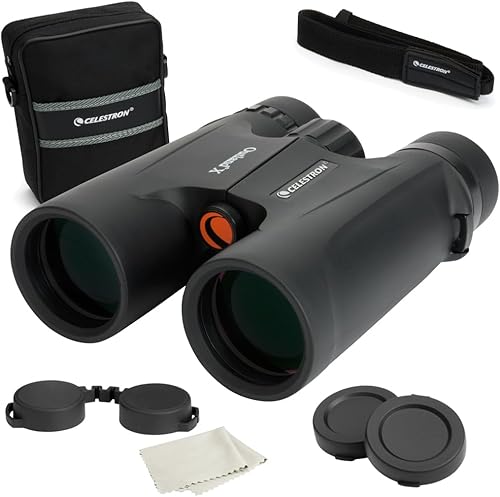
The Celestron Outland X models make the comparison direct: both have 10x power, while one uses 42mm objectives and the other 50mm. Their exit pupils are 4.2mm and 4.8mm, respectively.
A larger exit pupil may be useful in dimmer light, but a 50mm objective format can be bulkier to carry. Your choice depends on when you view and how long you carry your binoculars.

10x42 vs 10x50 binoculars: what changes?
The objective lens grows from 42mm to 50mm, while magnification stays at 10x. That gives the 10x50 a larger exit pupil, with a likely trade-off in size and carrying comfort.
The exit pupil is the beam of light leaving each eyepiece. Divide objective lens diameter by magnification: 42 divided by 10 gives 4.2mm, and 50 divided by 10 gives 5mm in theory.
The Celestron models have listed exit pupils of 4.2mm for the 10x42 and 4.8mm for the 10x50.
| Product | Best for | Magnification | Objective lens | Exit pupil | Our score |
|---|---|---|---|---|---|
| Celestron Outland X 10x42 | a lighter 10x format | 10x | 42mm | 4.2mm | 7.8 |
| Vortex Diamondback HD 10x50 | a wider stated view | 10x | 50mm | 5mm | 8.5 |
| Celestron Outland X 10x50 | a larger exit pupil | 10x | 50mm | 4.8mm | 7.7 |
A larger exit pupil can make it easier to keep the full view when your eyes move slightly off center. It may also help in dimmer viewing conditions, as long as your eyes can use the extra light.
That does not guarantee a brighter image in every situation. Lens coatings, prism quality and available light also affect the view.
Does 10x50 mean more magnification?
No, 10x42 and 10x50 binoculars magnify the subject by the same amount. The second number is the diameter of the objective lenses in millimeters.
At 10x, a distant subject appears the same apparent size through either format. The larger objectives gather more light, but they do not change the magnification.
If you want more reach, compare magnification options separately and consider image steadiness. Our guide to field of view on binoculars explains why a wider view can make it easier to locate and follow subjects.
Is the 10x50 brighter in low light?
A 10x50 can provide a larger exit pupil, which may be useful near dawn, dusk or under tree cover. It cannot create light when the scene is too dark, and the benefit depends on your eyes and the binoculars' optics.
The Celestron Outland X 10x50 has a 4.8mm exit pupil, compared with 4.2mm on the 10x42. The Vortex Diamondback HD 10x50 has a 5mm exit pupil.
A larger exit pupil can be easier to align with your eyes. That can make the view feel less fussy when you are moving or scanning, especially if your pupils are more open in dim light.
Bright views are not determined by objective size alone. The Celestron models both have multi-coated lenses and BaK-4 prisms, while the Vortex has fully multi-coated lenses and dielectric coating.
When does the larger exit pupil help?
It is most relevant when the light is limited and your pupils are open enough to take advantage of the larger beam. If you usually glass in full daylight, both formats may look similarly bright to you.
For quick wildlife checks during a hike, the light advantage may matter less than a binocular you are willing to keep close at hand. For extended observation at dusk, the larger objective may be worth carrying.
Think about how often you observe in dim light, then weigh that against the extra bulk of the 50mm format.
Which format is easier to carry?
A 10x42 is often a good starting point if carry comfort matters most. The smaller objective format tends to make a more compact binocular, though exact weight and dimensions vary by model.
Celestron describes the Outland X 10x42 as lightweight and pocket-friendly. Its listed weight is 2 pounds, while the Outland X 10x50 weighs 0.76kg, about 1.7 pounds.
These figures use different units and do not provide a precise head-to-head weight comparison.
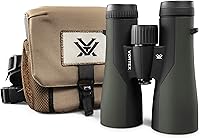
The Vortex Diamondback HD 10x50 weighs 1.9 pounds and includes a GlassPak case harness. Consider how the binocular sits against your chest when you bend or climb.
A binocular harness can help keep a pair close to your body. If your priority is reducing pack weight, see our lightweight binoculars guide.
Which one is steadier to use?
Neither format changes the fact that 10x magnification shows hand movement more than lower power. A stable stance, a support surface or a tripod can help with either size.
The two Celestron Outland X models and the Vortex Diamondback HD are tripod-adaptable. The Celestron models require a separate tripod adapter, which is not included.
A tripod is useful for long periods of observation or when you need to watch a fixed area. For quick scans, you may prefer handholding, but bracing your elbows or resting against a stable support can help.
A larger binocular can feel more substantial in your hands, but weight alone does not guarantee a steadier image. Fit, grip and how long you can hold it comfortably matter too.
Does a 10x50 have a wider field of view?
Not by format alone; field of view varies by model. Compare the exact figures rather than assuming a 50mm objective gives you a broader scene.
The Celestron Outland X 10x42 has a 5.5° angular field of view, and the 10x50 has 5.6°. The Vortex Diamondback HD 10x50 has a field of view of 315 feet at 1,000 yards.
Those figures use different ways to describe field of view. Check the units and distance before comparing numbers across brands.
If you track moving wildlife, field of view and how easily you can find the subject matter alongside brightness. The best 10x42 binoculars for everyday outdoor use can help you compare other models in the lighter format.
Which format fits hunting and distance viewing?
Choose 10x42 for mobile hunting and long approaches; consider 10x50 for stationary glassing in low light. Terrain, time of day and how you carry your gear can shift the decision.
In open country, 10x power helps you inspect distant slopes and tree lines. A 10x42 may be easier to carry between glassing spots, while a 10x50 may suit a fixed position where you can rest the binoculars on a tripod.
For elk hunting in open country, your viewing plan matters as much as lens size. Our guide to binoculars for elk hunting covers the balance between reach, light and carry needs.
Check weather protection and included accessories when comparing models. Both Celestron Outland X models are waterproof and nitrogen-purged, and the Vortex is water- and fogproof.
Which 10x42 or 10x50 models should you compare?
The Celestron Outland X pair offers a straightforward format comparison, while the Vortex Diamondback HD adds another 10x50 option. Choose based on carry comfort, exit pupil and features.
For more model choices in a familiar format, compare our guide to 10x42 binoculars for everyday outdoor use. It can help you decide whether the smaller objective format offers enough light and reach for your outings.
Should you choose 10x42 or 10x50 binoculars?
Pick 10x42 if you want a more carry-friendly format for daytime walks and general outdoor use. Pick 10x50 if low-light viewing is common and you are comfortable carrying larger binoculars.
Both provide 10x magnification, so the difference is not how large distant subjects appear. Start with when you use binoculars, then compare model-specific weight, field of view, exit pupil and tripod options.
If you are still deciding between power and portability, our binocular basics guide explains the numbers on binocular labels. For frequent dawn or dusk glassing, consider a 10x50.
Frequently asked questions
Are 10x50 binoculars brighter than 10x42 binoculars?
A 10x50 has a larger exit pupil than a 10x42, so it can deliver a wider light beam to your eye when your pupil can use it. That may help in dim conditions, but brightness also depends on the optics, your eyes and the available light.
Are 10x42 binoculars easier to carry?
A 42mm objective format is often more compact, though weight and dimensions vary by model. Compare the specific binoculars you are considering, then think about how long you will carry them and whether you use a harness.
Do 10x50 binoculars have more magnification than 10x42?
No. Both formats provide 10x magnification; 42mm and 50mm refer to objective lens diameter.
The larger objective can provide a larger exit pupil, while magnification stays the same.
Which is better for hunting, 10x42 or 10x50?
Choose 10x42 for a lighter carry on long walks, and consider 10x50 if you often glass in low light and accept the larger format. For open country, steady support matters with either 10x model because hand movement is more visible at higher magnification.
Does a 10x50 have a wider field of view?
Not automatically. Field of view depends on the specific binocular design, so compare the stated figures for the exact models.
For example, the Celestron Outland X 10x50 has a 5.6° angular field, while its 10x42 version has 5.5°.