Vortex Diamondback vs Crossfire Binoculars: Which Is Better? (November 2026)
Pick the Diamondback HD for better glass and a wider view; pick the Crossfire HD when weight and budget matter more. In this Vortex Diamondback vs Crossfire comparison, the Diamondback HD 10x50 wins overall for most buyers, while the Crossfire HD 12x50 suits hunters who want 12x power without the Diamondback price tier.
On this page (8 sections)
Pick the Diamondback HD for better glass and a wider view; pick the Crossfire HD when weight and budget matter more. In this Vortex Diamondback vs Crossfire comparison, the Diamondback HD 10x50 wins overall for most buyers, while the Crossfire HD 12x50 suits hunters who want 12x power without the Diamondback price tier.
Vortex sells both lines as HD binoculars with select glass elements. The difference is in the coatings, the field of view, the eye relief and the weight.
Those four things decide which one belongs in your pack.

Vortex Diamondback vs Crossfire: the quick verdict
The Diamondback HD 10x50 is the best pick for most readers, and the Crossfire HD 12x50 is the best value at 12x. The Crossfire HD 10x42 is the lightest, so it wins for all-day carrying.
The Diamondback HD 10x50 earns the overall nod because its dielectric coating and Armortek protection sit a step above the Crossfire's fully multi-coated glass. Add 17mm eye relief and a 315-foot field of view, and it handles most birding and hunting days well.
It also packs the most comfortable eyeglass fit of any model here, which matters more than a fraction of a pound to many readers.
The Crossfire HD 12x50 covers the 12x, 50mm niche at the Crossfire price tier. The Diamondback HD 12x50 adds the dielectric coating and Armortek protection on top.
Both 12x50s carry the same magnification and objective size, so the gap between them is glass quality rather than reach. Our Vortex Crossfire HD 12x50 review goes deeper on that model.
If you carry binoculars for hours, the Crossfire HD 10x42's 1.4 lb weight is the number that matters most. It also has the widest view of the four at 325 feet.
That mix of low weight and wide view is hard to beat for a birder who walks miles before the light gets good.
The two lines side by side
The Diamondback HD is the better binocular; the Crossfire HD is the lighter, lower-tier one. The table below lines up the four models by the specs that change the experience.
| Model | Magnification | Objective | Field of view | Eye relief | Weight | Coating |
|---|---|---|---|---|---|---|
| Diamondback HD 10x50 | 10x | 50mm | 315 ft | 17mm | 1.9 lb | Dielectric + Armortek |
| Diamondback HD 12x50 | 12x | 50mm | 271 ft | 14mm | 1.8 lb | Dielectric + Armortek |
| Crossfire HD 10x42 | 10x | 42mm | 325 ft | 15mm | 1.4 lb | Fully multi-coated |
| Crossfire HD 12x50 | 12x | 50mm | 273 ft | 15mm | 1.8 lb | Fully multi-coated |
All four are roof-prism binoculars with aluminum bodies, rubber armor and o-ring seals. Each one ships with the GlassPak case and harness.
All carry Vortex's unlimited, unconditional VIP Warranty. The roof prism design is what keeps these binoculars compact and tough enough for field use.
The table shows where the lines split. Every Diamondback HD model gets the dielectric coating and Armortek protection.
No Crossfire HD model does. That single difference sets the tone for the rest of this comparison.
There is one more split the table hides. The Crossfire line lists nitrogen purging in its bullets.
The Diamondback line lists argon purging. Both are sealed and fogproof, so neither has an edge in the field, but the spec sheets are not identical word for word.
Where the specs match
All four have a 4.2mm exit pupil except the Diamondback HD 12x50 at 4.17mm. That figure describes the light column that reaches your eye.
It is close enough across the group that brightness differences come from glass and objective size, not the exit pupil.
All four also share a center focus wheel that moves both barrels at once. The right-eyepiece diopter lets you tune each eye separately.
The diopter range differs, though, and that matters to some readers. See the fit section below.
Which glass coating matters more?
The Diamondback HD's dielectric coating gives brighter, more color-accurate images, and that is the biggest reason to pay more. The Crossfire HD's fully multi-coated lenses still cut reflections on every air-to-glass surface.
Vortex describes the dielectric coating as producing bright, clear, color-accurate images. It works alongside the fully multi-coated layers on the same Diamondback lenses.
Armortek then protects the exterior lens surfaces from scratches, oil and dirt. That protection matters when you set the binoculars down on rock or shove them through brush.
The Crossfire HD relies on its fully multi-coated lenses alone. Those multiple anti-reflective coatings raise light transmission, but there is no dielectric layer named in its spec.
That matters most in low light and when you chase color detail.
Both lines use select glass elements to cut chromatic aberration. In practice, the Diamondback's edge in coatings shows up as cleaner color and a brighter image in shade.
That is the honest difference the specs support.
Who notices the coating gap?
Birders and anyone glassing in dim light notice it first. A brighter, color-accurate view helps you pick out plumage tones and separate a bird from a branch.
Hunters glassing at dawn or dusk also benefit. The Diamondback's coating stack makes more of the light the 50mm objective gathers.
If you mostly glass in bright daylight, the gap narrows. In flat noon light, both lines look good.
The Armortek layer is the other half of the coating story. It is a protective coating, not an optical one.
It keeps the exterior glass clean so the dielectric layers can keep doing their job over years of use. A scratched lens defeats any coating, so the protection is part of the value.
Field of view: which model sees more?
The Crossfire HD 10x42 has the widest view at 325 feet, and the Diamondback HD 10x50 follows at 315 feet. At 12x, both 50mm models drop to about 271 to 273 feet.
A wider field of view helps you find a moving bird or an animal before you settle on it. The 10x models are the easy winners here.
Their 10x power also gives steadier handheld viewing than 12x. Shake grows with magnification, so a 10x view is calmer when you stand and glass without support.
The 12x pair trades view width for reach. That suits open country where game sits far off.
It costs you the ability to scan a wide area quickly. A 271-foot view at 12x means less ground covered per sweep than the 10x models at 315 to 325 feet.
If you track warblers in thick cover, the Crossfire HD 10x42's 325-foot view is the practical pick. For mule deer on a distant ridge, the 12x reach matters more than the view width.
The 273-foot Crossfire 12x50 view just edges the 271-foot Diamondback 12x50, but a two-foot gap at 1,000 yards will not change how you hunt.
The table measures all views at 1,000 yards. That is a standard way to compare width, and it lets you scale the numbers to your own distance.
Eye relief and eyeglass comfort
The Diamondback HD 10x50 gives the most eye relief at 17mm, and the Diamondback HD 12x50 gives the least at 14mm. The two Crossfire models sit in between at 15mm.
Eye relief is the distance your eye sits from the lens for a full view. Glasses wearers need more of it.
If you shoot with glasses or sunglasses on, the 17mm of the Diamondback HD 10x50 is the safest fit. The 14mm on the Diamondback HD 12x50 is the tightest of the group and the one to check first if you wear glasses.
All four have twist-up eyecups so you can set the right position with or without glasses. A center focus wheel moves both barrels at once.
The diopter on the right eyepiece adjusts for the gap between your eyes.
The diopter difference
The Crossfire HD 12x50 lists a diopter range of plus or minus 5. The Diamondback HD 12x50 lists the same plus or minus 5 range.
The Diamondback HD 10x50 lists a wider band of plus or minus 2 to plus or minus 4 diopters. The Crossfire HD 10x42 spec sheet does not name a figure.
That spread matters if your two eyes differ a lot. A wider diopter range lets the right eyepiece compensate for a bigger gap between your eyes.
If your prescription is strong and uneven, check the listed range on the model you want before you buy.
The Diamondback HD 12x50's 14mm is tight for glasses. If 12x is your priority and you wear glasses, the Crossfire HD 12x50's 15mm is the easier fit.
Both 12x50s have the same eye relief as the Crossfire 10x42, so the 12x pair is no worse for glasses than the lightest model.
Weight and carrying comfort
The Crossfire HD 10x42 is the lightest at 1.4 lb, and the two 50mm models are the heaviest at about 1.8 to 1.9 lb. The 42mm objective is what makes the Crossfire 10x42 light.
An extra half pound tells over a full day of walking. The 10x42's smaller objective gathers less light than the 50mm models, so you give up some low-light brightness for that weight saving.
The Diamondback HD 10x50 is the heaviest of the four at 1.9 lb, and it also has the largest body of the group at 9.2 by 7.7 by 5.2 inches.
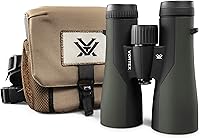
The included GlassPak harness helps with all four. It holds the binoculars against your chest and keeps them ready.
Our binocular harness and carry guide covers when a dedicated harness beats the included one. A neck strap comes in the box too, but the harness is the better way to carry a 50mm model over distance.
Pick the 1.4 lb Crossfire HD 10x42 for long hikes and all-day birding. Pick a 50mm model when low-light performance matters more than the weight.
The 1.8 lb 12x50s are the middle ground and sit only 0.4 lb above the 10x42.
The 50mm trade-off
The 50mm objective lenses gather more light for dawn and dusk. The cost is about 0.4 to 0.5 lb more than the 42mm model.
That is a fair trade for a hunter who sits still at last light.
The 50mm models are also tripod adaptable, and so is the 10x42. You can mount any of the four on a tripod or a car window mount.
A steady rest helps most at 12x, where shake is strongest. That is another point in favor of the 12x50s for open-country work from a fixed position.
Which should you buy?
Buy the Diamondback HD 10x50 for the best all-round view, the Crossfire HD 10x42 for light carrying, and the 12x models for reach. Match the model to how you glass, not to the badge on the box.
The Diamondback HD 10x50 is the one to choose if you want one binocular for birding and hunting. Its dielectric coating, 17mm eye relief and 315-foot view handle both well.
That is why it is our best overall pick. It is also the model with the most comfortable glasses fit.
Choose the Crossfire HD 10x42 if weight is your top concern. It is the lightest and widest of the four.
It also suits anyone who wants Vortex HD glass without the Diamondback price tier. Its 15mm eye relief is a fair middle ground for glasses.
If you need 12x, the Diamondback HD 12x50 has the better glass. The Crossfire HD 12x50 is the value pick at the same power and objective size.
Compare the field of view before you decide; the Crossfire's 273 feet edges the Diamondback's 271. The Crossfire's 15mm eye relief is also friendlier to glasses than the Diamondback's 14mm.
If you weigh Vortex against other brands, our Athlon vs Vortex binoculars comparison helps frame the choice. Readers also ask whether other brands stack up: see are Bushnell binoculars good and are Leupold binoculars good.
By use
Birders should start with the Diamondback HD 10x50 for color and view width. Open-country hunters should look at the Diamondback HD 12x50.
Backpackers and long-day birders should carry the Crossfire HD 10x42.
Budget-focused hunters who still want 12x should pick the Crossfire HD 12x50. It gives the same magnification and objective size as the Diamondback 12x50 for less.
Tripod and window-mount users should lean to the 12x50s for the extra reach and the steady rest. Glasses wearers should put the Diamondback HD 10x50 at the top of the list for its 17mm eye relief.
The verdict on Diamondback vs Crossfire
The Diamondback HD wins the Vortex Diamondback vs Crossfire matchup for most buyers, and the Crossfire HD is the smarter pick when weight or price tier leads. The higher score goes to the Diamondback HD 10x50 as the best overall choice.
Choose the Diamondback HD 10x50 if you want the best glass and view in the lineup. It is the model we would hand most birders and hunters first.
The dielectric coating, Armortek protection and 17mm eye relief are the reasons.
Choose a Crossfire HD if you want Vortex HD optics at a lower tier or the lightest carry. The 10x42 is the all-day pick.
The 12x50 is the value 12x pick.
Whichever you choose, plan how you carry it. A chest harness spreads the weight of the 50mm models and keeps the binoculars steady.
That last step makes more difference on a long day than the gap between these two lines. The right carry turns a good binocular into one you reach for without thinking.
Frequently asked questions
Is the Diamondback HD worth the extra cost over the Crossfire HD?
Yes, if you value brighter glass and a wider view. The Diamondback HD adds a dielectric coating and Armortek lens protection, and its 10x50 model has 17mm eye relief against 15mm on the Crossfire.
The Crossfire HD stays the lighter, lower-tier option.
Which is better for hunting, the Diamondback or the Crossfire?
The Diamondback HD 12x50 is the stronger hunting pick when you glass open country at distance. The Crossfire HD 12x50 covers the same 12x and 50mm specs at a lower price tier.
Pick the Crossfire if you walk long days and want to save weight and money.
What is the difference between Diamondback HD and Crossfire HD glass?
Vortex gives the Diamondback HD a dielectric coating for bright, color-accurate images plus Armortek protection on the exterior lenses. The Crossfire HD uses fully multi-coated lenses on all air-to-glass surfaces.
Both cut chromatic aberration with select HD glass elements.
Can I use either binocular with glasses?
Yes. Both lines have twist-up eyecups and a right-eyepiece diopter.
Eye relief varies by model, from 17mm on the Diamondback HD 10x50 down to 14mm on the Diamondback HD 12x50, so try the fit if you wear glasses.
Do the Diamondback and Crossfire come with a harness?
Both ship with Vortex's GlassPak case and harness, so you get quick deployment and protection in the field. A dedicated chest harness can spread the weight better on long days, especially with the 1.8 and 1.9 lb 50mm models.