Nikon PROSTAFF P3 vs P7 10x42: Is the P7 Worth It? (October 2026)
The P7 adds a locking diopter and oil- and water-repellent lens coatings; the P3 shares its core viewing specs. Both are 10x42 binoculars with a 367-foot field of view and 15.7 mm eye relief.
On this page (5 sections)
The P7 adds a locking diopter and oil- and water-repellent lens coatings; the P3 shares its core viewing specs. In this Nikon PROSTAFF P3 vs P7 comparison, both have 10x magnification, 42 mm objective lenses, a 367-foot field of view, 15.7 mm eye relief and a listed weight of 1.3 pounds.
The P7 also has phase-correction and dielectric prism coatings. Both models are waterproof and fogproof.

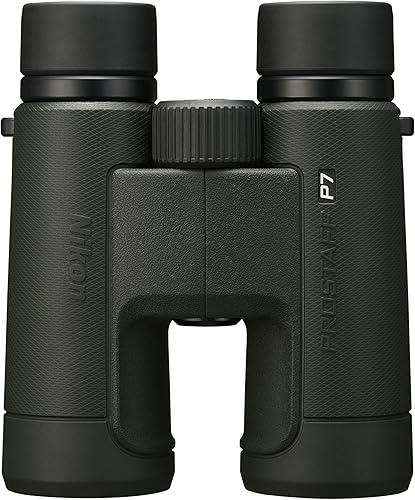
Nikon PROSTAFF P3 vs P7: what changes?
The P7 adds a locking diopter and repellent lens coatings, while both models share the same listed field of view, eye relief and weight. Their prism coatings differ: the P7 has phase-correction and dielectric coatings, and the P3 has a silver-alloy coating.
Both have multilayer-coated lenses, a center focus wheel, turn-and-slide eyecups, nitrogen filling and rubber armor. Their listed dimensions are close, at about 5.9 inches long and 5.1 inches wide.
The P3 is black, while the P7 is dark green. Choose the finish you prefer.
Is the P7 worth it for birding?
The P7 suits you if you want a locking diopter or lenses with oil- and water-repellent coatings. The P3 shares the 10x42 format and 15.7 mm eye relief.
The P7's locking diopter ring is designed to preserve your focus setting. That can help when the binoculars move between users or the adjustment gets bumped in a pack.
The repellent lens coating can make fingerprints and moisture easier to wipe away. Clean the lenses carefully to protect their coatings.
For more options in this size, see our guide to best 10x42 binoculars for outdoor use. If you are comparing a Nikon model in another magnification, see the PROSTAFF P3 and Monarch M5 8x42.
When does the P3 make more sense?
Choose the P3 if you don't need the P7's locking diopter or repellent lens coatings. Its listed magnification, field of view and eye relief match the P7's.
Both models have a 367-foot field of view at 1,000 yards, so they show the same stated span when scanning a landscape or following a moving bird. Both list 15.7 mm of eye relief, a useful figure to consider if you wear glasses.
The P3 has multilayer-coated lenses and a silver-alloy prism coating. It is waterproof and fogproof, with rubber armor and a fiberglass-reinforced polycarbonate body.
Our guide to choosing binoculars explains which specifications matter for your viewing habits. The binocular basics guide covers terms such as field of view and eye relief.
Do the P3 and P7 feel different to carry?
Both weigh 1.3 pounds, so neither has a listed weight advantage. Each is a full-size 10x42 binocular with rubber armor and a center focus wheel.
A binocular harness can spread the load across your upper body during a long walk. See our best binocular harness options to compare ways to carry full-size binoculars.
Both models include a neck strap. Your comfort depends on how long you carry them and how the strap fits, so consider your usual route and carrying preference.
Which Nikon PROSTAFF 10x42 should you choose?
Pick the P7 for its locking diopter and repellent lens coatings; pick the P3 if the shared viewing figures meet your needs. Both offer 10x magnification, a 367-foot field of view, 15.7 mm eye relief and waterproof, fogproof construction.
The P7 has more handling and lens-care features. If you don't need them, choose between the models by their finish and other listed features.
The P7's prism design includes phase-correction and dielectric high-reflective multilayer coatings. The specifications identify this feature difference but don't quantify its effect on everyday viewing.
Choose the P7 if you expect to use the locking diopter and repellent lens coatings. Otherwise, the P3 offers the same listed core viewing figures.
Frequently asked questions
What is the difference between Nikon PROSTAFF P3 and P7 10x42?
The P7 adds a locking diopter ring and oil- and water-repellent lens coatings. Both are 10x42 binoculars with a 367-foot field of view, 15.7 mm eye relief and 1.3-pound weight, so the choice depends on whether those added features suit your needs.
Is the Nikon P7 clearer than the P3?
The P7 has phase-correction coated roof prisms and a dielectric high-reflective multilayer prism coating, while the P3 has a silver-alloy prism coating. These are different optical features, but the specifications do not provide a direct measured comparison of image clarity.
Are the Nikon PROSTAFF P3 and P7 both waterproof?
Yes. Both models are described as waterproof and fogproof, with nitrogen filling and sealing to help prevent water intrusion and fogging.
The P3 is described as waterproof down to 3.3 ft and is not intended for underwater use.
Which Nikon PROSTAFF 10x42 is better with glasses?
Both list 15.7 mm of eye relief and turn-and-slide eyecups, so neither has a stated eye-relief advantage. Your fit depends on your glasses and how the eyecups meet your face; adjust the eyecups and binocular spacing for a full view.


